
Skip to content
AcousticMusic.News

AcousticMusic.News

Acoustic music, jazz and classical

Primary Menu
  • Home
  • Genres
    • Blues
    • Jazz
    • Folk
    • Classical
    • Folk Ballad
    • Folk Pop
    • Electric Folk
    • Soft Folk
    • World Folk
    • Acoustic Rock
    • Cool Jazz
    • Smooth Jazz
    • Contemporary Jazz
    • Gypsy Jazz
    • Big Band
    • Bossa Nova
    • Baroque
    • Opera
    • Orchestral
    • Modern Classical
  • About Us
    • About Us
    • Contact Us
    • Privacy Policy
    • Cookie Policy
Light/Dark Button
Subscribe
  • Home
  • Jazz
  • The History of Sugar Opens on a Guitar Arpeggio and Makes John Leslie Wait
  • Article
  • Contemporary Jazz
  • Featured
  • Jazz
  • Music
  • News

The History of Sugar Opens on a Guitar Arpeggio and Makes John Leslie Wait

Clara Ambrose September 8, 2026 (Last updated: September 8, 2026) 5 minutes read
The History of Sugar Opens on a Guitar Arpeggio and Makes John Leslie Wait

The History of Sugar Opens on a Guitar Arpeggio and Makes John Leslie Wait

How a Guitar Arpeggio, a Keyboard Theme and a Forward Vocal Build a Latin Jazz Ballad

The History of Sugar opens with a guitar arpeggio and nothing else, laying out the chords one note at a time. A keyboard theme arrives over the top of it, romantic and unhurried. Only then does John Leslie start singing. Several more lines pass before percussion and electric guitar step into the space. That staging is the whole argument of the record, and it is a decision rather than a habit.

John Leslie’s music is in the playlist below, and his coverage across the network is gathered on the John Leslie profile. The History of Sugar came to this desk through PopHits.Co Music Charts, which verifies independent artists and places their releases across its network of music news sites. Give it a listen, then read on.


The History of Sugar Opens on a Guitar Arpeggio and Makes John Leslie Wait

The Hook of The History of Sugar, and What It Withholds

Most ballads state their case immediately. This one does not. The opening arpeggio sets out the harmony in a form so plain a listener could play it back after one pass. That is what makes the entrance of everything else register as an event.

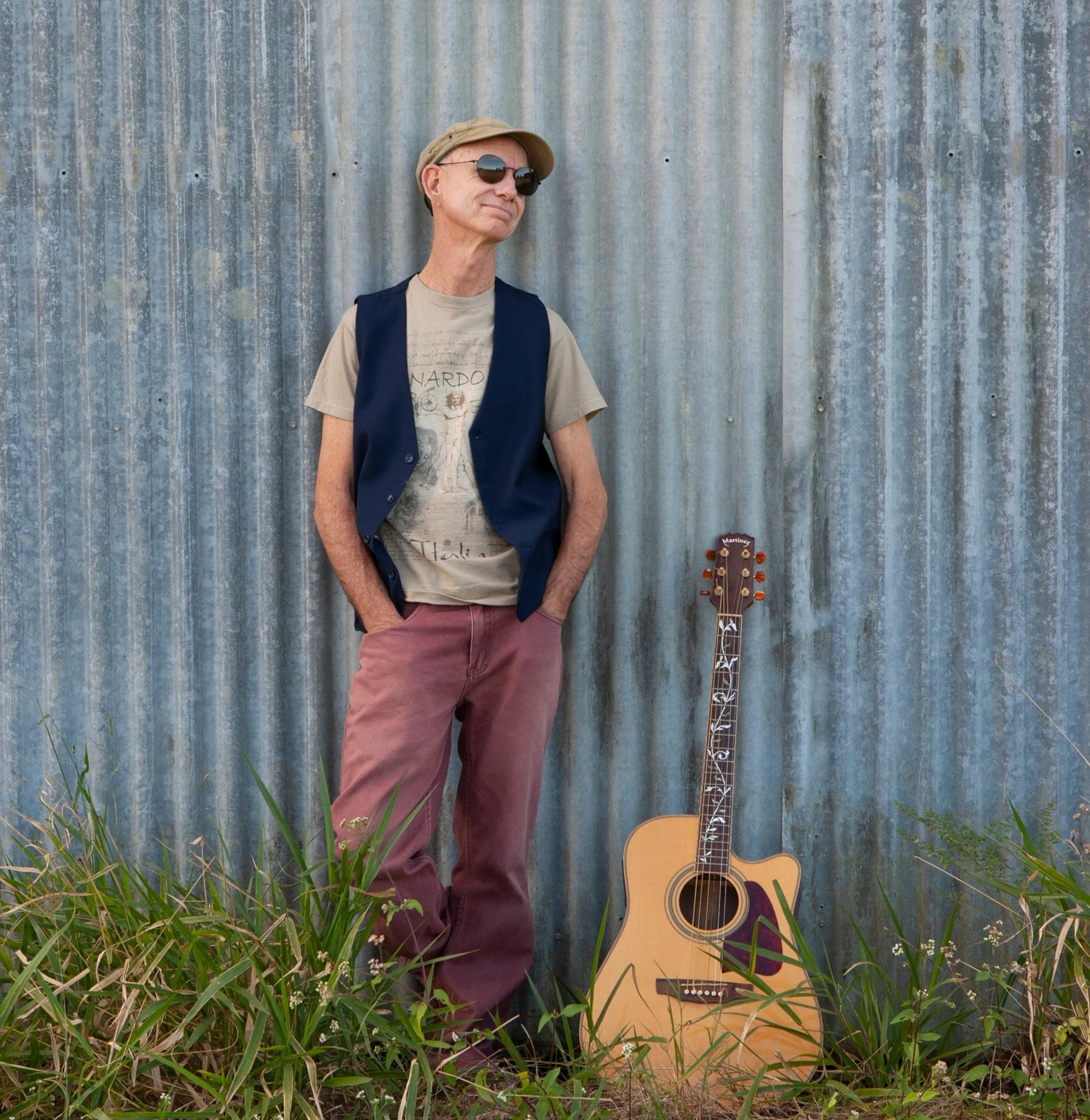
Leslie is an award-winning Australian singer and songwriter based in Brisbane. His catalogue has moved through dream pop, pop rock and gospel without settling anywhere for long. The History of Sugar weaves jazz harmony through Latin percussion and layered backing vocals, which is a further move again. He recorded it with Peter Koppes, the ARIA Hall of Fame inductee and long-serving guitarist of The Church. The single is credited to them both.

That collaboration explains the restraint. Koppes spent a career in a band whose signature was a guitar part that circles rather than announces. The opening figure here behaves the same way. It waits.

The Lyric, and the Choice to Keep It Audible

The words are the reason for the arrangement, and the mix says so. Every syllable sits forward of the ensemble, close enough that the consonants survive. Reviewers kept returning to it. Music Arena Gh noted that every word is perfectly audible. The pauses between phrases carry as much weight as the phrases themselves. That decision carries a cost. A vocal placed that far forward leaves nowhere to hide a weak line.

The lines hold. The song follows a meeting and the tenderness that came after it. Then the discovery that two people were not a match, and the decision to part without damage. Love, loss, forgiveness and moving on are the stated subjects. The sequence matters: the record ends on the fourth rather than dwelling on the second.

A second story runs underneath, and Leslie has been candid about it on his own pages. He changed his artist name and watched his listener numbers fall sharply in the confusion that followed. He made this record as the return. A song about parting cleanly and carrying on, from someone rebuilding an audience from a standing start. That is not a coincidence you need to strain to hear.

The History of Sugar Opens on a Guitar Arpeggio and Makes John Leslie Wait

The Structure, and Where the Ensemble Enters

Listen for the order of arrivals, because the piece is built out of them. Guitar first, alone. Keyboard second, carrying a melodic idea that will not be sung. Voice third, in a calm register that stays conversational rather than declamatory. Percussion and electric guitar fourth. From there the arrangement thickens, until the chorus lands on a full ensemble. Artistionline tracked the same sequence bar by bar.

Nothing in that order is unusual on its own. What is unusual is the patience. Several lines pass before the band commits. A lesser version would have brought the percussion in at bar one, proving its Latin credentials early. Holding it back turns the groove into a reveal.

The Latin element, when it does arrive, is rhythmic rather than decorative. It sits under the jazz voicings instead of competing with them, and the layered harmonies float above both. Leslie’s voice stays warm and even across its range. The recording stays dry enough that you hear the performance rather than the room. That suits a lyric this direct.

AcousticMusic.News’s curator team: “The interesting thing on this record is how long it waits. A guitar arpeggio, then a keyboard, then a voice, and only then a band. Most producers would have opened with the percussion, because the Latin rhythm is the most immediately attractive thing here. Leslie and Koppes held it back and made it mean something when it arrived.”

Where to Hear The History of Sugar and Follow John Leslie

The single is on Spotify. The catalogue sits on the Spotify artist page, Apple Music, Deezer, SoundCloud and Bandcamp.

John Leslie posts to YouTube, Instagram, Facebook, TikTok and X.


The Cardboard Falcon: What the Microphone Hears in Mico Nonet's Quintet
Article Featured Modern Classical Music News Orchestral

The Cardboard Falcon: What the Microphone Hears in Mico Nonet’s Quintet

Clara Ambrose
October 23, 2026
Five Orchestra Players and Vintage Synths Trade the Lead Across Fourteen Short Pieces A French horn, a cello, a viola…

Read More..

How a Redwood Forest Gets Captured on the Open Field Album by Luke Mombrea, Darren Sng and Levent Altuntas
Article Featured Modern Classical Music News

How a Redwood Forest Gets Captured on the Open Field Album by Luke Mombrea, Darren Sng and Levent Altuntas

Clara Ambrose
October 23, 2026
Three Composers Improvise with Field Recordings in One Continuous Piece at LSO St Luke’s LSO St Luke’s, the London Symphony…

Read More..

The Barrow-in-Furness Room Where Emker Cel Recorded The Quietest Of Revolutions

The Barrow-in-Furness Room Where Emker Cel Recorded The Quietest Of Revolutions

How One Guitar Line Gets Captured in On the Road by Niky Pasolini

How One Guitar Line Gets Captured in On the Road by Niky Pasolini

How a Crush Gets Captured: Misty Blue Rhyme Touch, Enough and Rush Into Crushed

How a Crush Gets Captured: Misty Blue Rhyme Touch, Enough and Rush Into Crushed

The Room in the Recording: Phil Lentz Presents... Took Shape in Bitter End Jazz Workshops

The Room in the Recording: Phil Lentz Presents… Took Shape in Bitter End Jazz Workshops

The Room in the Recording: Pinky Loops Layer Winterstellar From Electric Violin, Cello and a Looper

The Room in the Recording: Pinky Loops Layer Winterstellar From Electric Violin, Cello and a Looper

How a Solo Vocal Gets Captured on Yours Faithfully by OneNamedPeter

How a Solo Vocal Gets Captured on Yours Faithfully by OneNamedPeter

Phil Lentz, Richard Philbin and the New York Jazz Workshops Behind Bebopping Along

Phil Lentz, Richard Philbin and the New York Jazz Workshops Behind Bebopping Along

How One Acoustic Guitar Gets Captured on the Sem Palavras Album by Grecco Buratto

How One Acoustic Guitar Gets Captured on the Sem Palavras Album by Grecco Buratto

Across the Hemisphere Keeps Marianne Flemming's Home Studio Band in the Room

Across the Hemisphere Keeps Marianne Flemming’s Home Studio Band in the Room

Víkingur Ólafsson seated in front of a wooden wall

Víkingur Ólafsson Steps In for Trifonov on the Berlin Phil’s Brahms Tour

Sara Moller Gathers Banjo, Clarinet and Trumpet Around the Piano for the Stories on How and How

Sara Moller Gathers Banjo, Clarinet and Trumpet Around the Piano for the Stories on How and How

The Room in the Recording: MIRIEL Made Silenced on a Norwegian Island

The Room in the Recording: MIRIEL Made Silenced on a Norwegian Island

Load More

About The Author

Clara Ambrose

Clara Ambrose covers acoustic music, jazz and classical for AcousticMusic.News. Writes about performances captured rather than constructed, and what it takes to record an instrument honestly.

See author's posts

Post navigation

Previous: Stephanie Rodd Recovered Puts Piano Chords Before Words
Next: Nuclear Family Band Keep the Room in the Recording on a Father’s Letter Called “Asshole”

Related Stories

The Cardboard Falcon: What the Microphone Hears in Mico Nonet's Quintet
  • Article
  • Featured
  • Modern Classical
  • Music
  • News
  • Orchestral

The Cardboard Falcon: What the Microphone Hears in Mico Nonet’s Quintet

Clara Ambrose October 23, 2026
How a Redwood Forest Gets Captured on the Open Field Album by Luke Mombrea, Darren Sng and Levent Altuntas
  • Article
  • Featured
  • Modern Classical
  • Music
  • News

How a Redwood Forest Gets Captured on the Open Field Album by Luke Mombrea, Darren Sng and Levent Altuntas

Clara Ambrose October 23, 2026
The Barrow-in-Furness Room Where Emker Cel Recorded The Quietest Of Revolutions
  • Acoustic Rock
  • Article
  • Featured
  • Music
  • News

The Barrow-in-Furness Room Where Emker Cel Recorded The Quietest Of Revolutions

Clara Ambrose October 23, 2026

Recent Posts

  • The Cardboard Falcon: What the Microphone Hears in Mico Nonet’s Quintet
  • How a Redwood Forest Gets Captured on the Open Field Album by Luke Mombrea, Darren Sng and Levent Altuntas
  • The Barrow-in-Furness Room Where Emker Cel Recorded The Quietest Of Revolutions
  • How One Guitar Line Gets Captured in On the Road by Niky Pasolini
  • How a Crush Gets Captured: Misty Blue Rhyme Touch, Enough and Rush Into Crushed

Archives

  • October 2026
  • September 2026
  • August 2026
  • July 2026

Categories

  • Acoustic Rock
  • Article
  • Big Band
  • Blues
  • Celtic Folk
  • Chamber Folk
  • Classical
  • Contemporary Folk
  • Contemporary Jazz
  • Electric Folk
  • Featured
  • Folk
  • Folk Ballad
  • Folk Pop
  • Indie Folk
  • Irish Folk
  • Jazz
  • Minimalist
  • Modern Classical
  • Music
  • Music Awards & Recognition
  • Music Production & Producers
  • News
  • Orchestral
  • Romantic
  • Scottish Folk
  • Singer-Songwriter Folk
  • Smooth Jazz
  • Soft Folk
  • Traditional Folk

Latest

The Cardboard Falcon: What the Microphone Hears in Mico Nonet's Quintet
  • Article
  • Featured
  • Modern Classical
  • Music
  • News
  • Orchestral

The Cardboard Falcon: What the Microphone Hears in Mico Nonet’s Quintet

Clara Ambrose October 23, 2026
How a Redwood Forest Gets Captured on the Open Field Album by Luke Mombrea, Darren Sng and Levent Altuntas
  • Article
  • Featured
  • Modern Classical
  • Music
  • News

How a Redwood Forest Gets Captured on the Open Field Album by Luke Mombrea, Darren Sng and Levent Altuntas

Clara Ambrose October 23, 2026
The Barrow-in-Furness Room Where Emker Cel Recorded The Quietest Of Revolutions
  • Acoustic Rock
  • Article
  • Featured
  • Music
  • News

The Barrow-in-Furness Room Where Emker Cel Recorded The Quietest Of Revolutions

Clara Ambrose October 23, 2026
How One Guitar Line Gets Captured in On the Road by Niky Pasolini
  • Article
  • Contemporary Folk
  • Featured
  • Indie Folk
  • Music
  • News
  • Singer-Songwriter Folk

How One Guitar Line Gets Captured in On the Road by Niky Pasolini

Clara Ambrose October 18, 2026
  • Home
  • Privacy Policy
  • Cookie Policy
AcousticMusic.News | ReviewNews by AF themes.
AcousticMusic.News
Manage Consent
To provide the best experiences, we use technologies like cookies to store and/or access device information. Consenting to these technologies will allow us to process data such as browsing behavior or unique IDs on this site. Not consenting or withdrawing consent, may adversely affect certain features and functions.
Functional Always active
The technical storage or access is strictly necessary for the legitimate purpose of enabling the use of a specific service explicitly requested by the subscriber or user, or for the sole purpose of carrying out the transmission of a communication over an electronic communications network.
Preferences
The technical storage or access is necessary for the legitimate purpose of storing preferences that are not requested by the subscriber or user.
Statistics
The technical storage or access that is used exclusively for statistical purposes. The technical storage or access that is used exclusively for anonymous statistical purposes. Without a subpoena, voluntary compliance on the part of your Internet Service Provider, or additional records from a third party, information stored or retrieved for this purpose alone cannot usually be used to identify you.
Marketing
The technical storage or access is required to create user profiles to send advertising, or to track the user on a website or across several websites for similar marketing purposes.
  • Manage options
  • Manage services
  • Manage {vendor_count} vendors
  • Read more about these purposes
View preferences
  • {title}
  • {title}
  • {title}