The Cardboard Falcon: What the Microphone Hears in Mico Nonet's Quintet
Five Orchestra Players and Vintage Synths Trade the Lead Across Fourteen Short Pieces
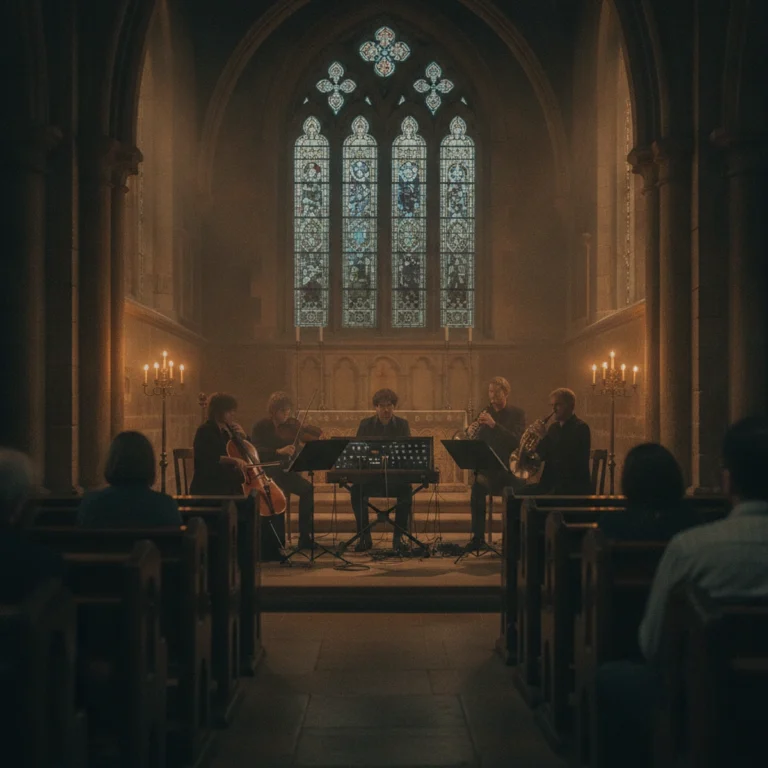
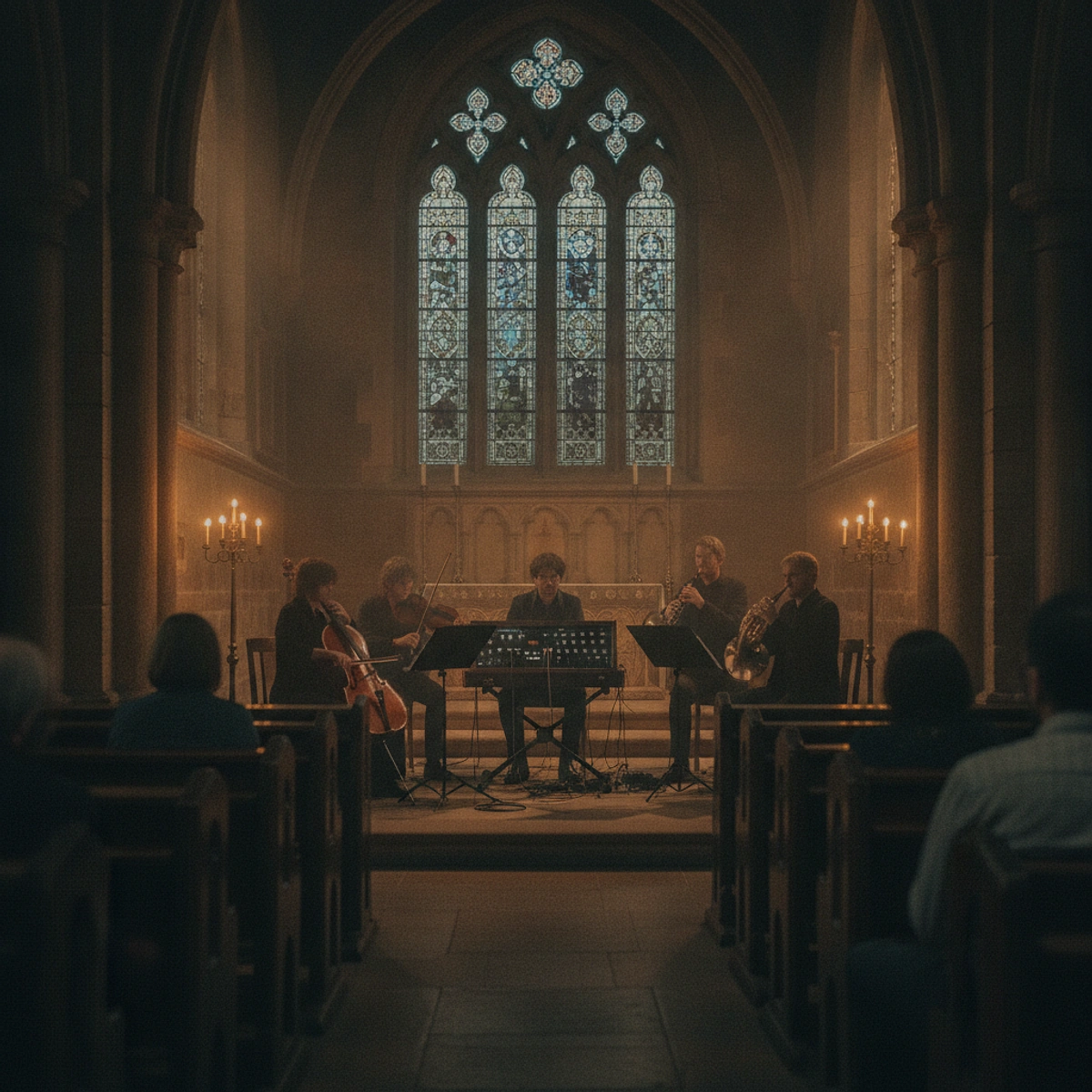
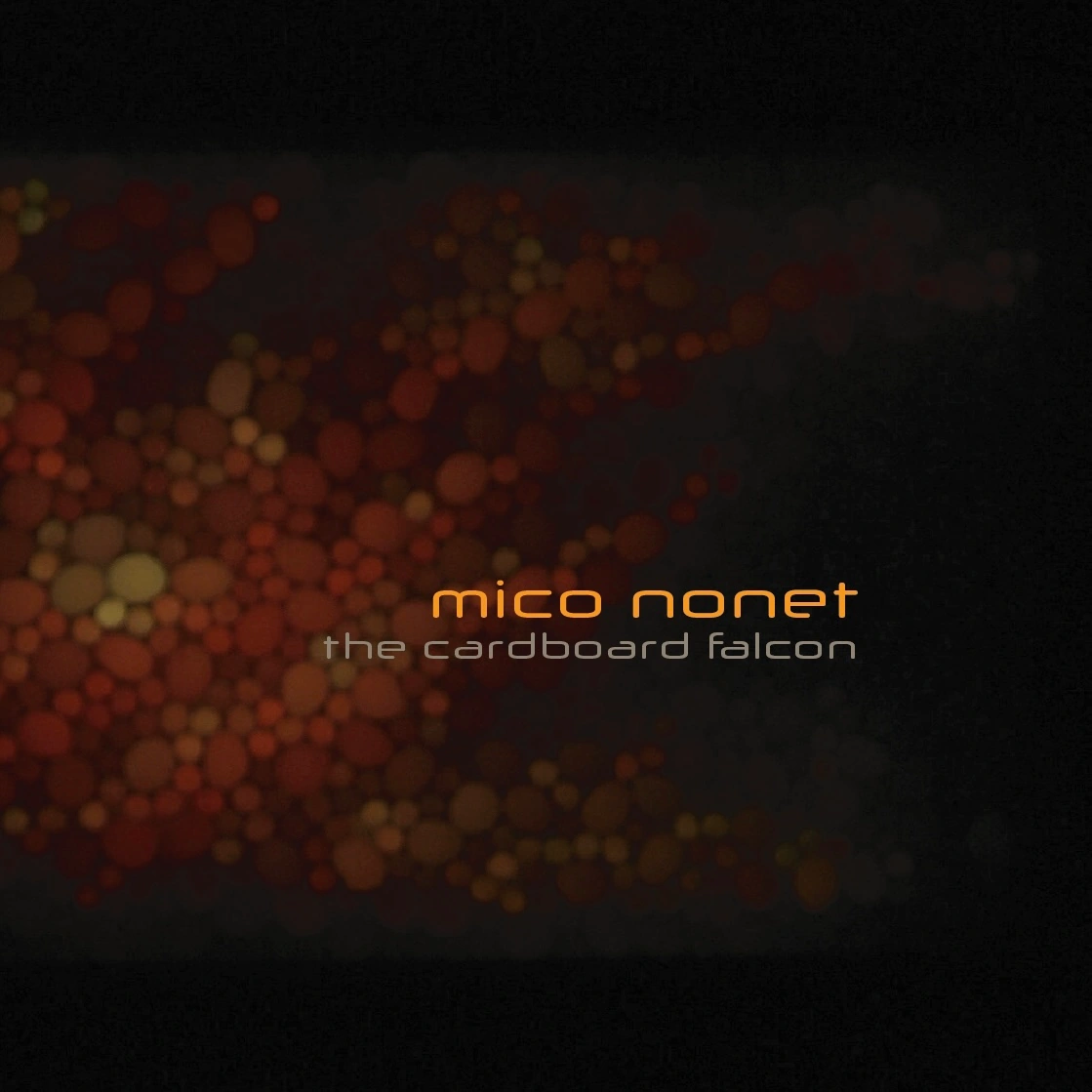
A French horn, a cello, a viola and an oboe, captured in churches, homes and halls, share the frame with a synthesizer that never asks for the spotlight. That is the method behind the cardboard falcon, the second album from the Santa Barbara ambient chamber group Mico Nonet. It came out on 7 May 2026 through Ninevolt Labs, eighteen years after their debut, The Marmalade Balloon.
Mico Nonet’s music sits in the playlist below, beside the modern classical and minimalist pieces this desk keeps returning to, and the quintet’s coverage is collected on the Mico Nonet artist profile. Their album the cardboard falcon reached AcousticMusic.News through PopHits.Co Music Charts, which verifies independent artists and places their releases across its network of music news desks. Give the album a listen, then keep reading for how five players built it.

Principal Players From New York, Seattle and Baltimore Give The Cardboard Falcon Its Lead Voices
Start with who is in the room. David Cooper plays French horn and became principal horn of The New York Philharmonic in May 2026. Efe Baltacigil is principal cellist of the Seattle Symphony. Katherine Needleman, principal oboist of the Baltimore Symphony Orchestra, plays oboe, oboe d’amore and English horn. Carrie Dennis completes the strings on viola, after a career that has taken in the Berlin Philharmonic, the Los Angeles Philharmonic and the Philadelphia Orchestra. Finally, Joshua Lee Kramer, formerly of the rock band Matt Pond PA, plays synthesizer and guitar. He also recorded and mixed the album.
That lineup explains the first thing you notice about the cardboard falcon. These players spend their working weeks inside large orchestras. There, every part sits in a section and balances against a hall. On this record, however, each player stands alone. A horn line that would vanish into a brass chord on a symphony stage now sounds on its own, close up, with the room around it. Kramer captured the acoustic parts in churches, homes and halls rather than one dry studio. As a result, the decay of each phrase belongs to a particular space.

Where the Melody Sits on an Instrumental Record, Passed Between Horn, Oboe d’Amore and Cello
Mico Nonet is an instrumental group, so whichever player leads a piece carries its lyric. In its July review, textura described arrangements where one musician steps forward on one piece and supports on the next. Lines pass between foreground and background in a moving counterpoint. On twigs and acorns, for example, textura heard the horn take a sombre line while the oboe and the strings coloured the space around it. Needleman’s three double reeds also widen the palette. The oboe d’amore sits lower and softer than the oboe, and the English horn sits lower still.
The synthesizer works differently. The same review points to casimir, the opening piece, and later squirrel shaped shrubbery. In both, Kramer keeps the synthesizer in the background as a low murmur under the acoustic instruments. Where he adds guitar, it acts as another connecting thread. Meanwhile, Igloo Magazine heard the record against the acoustic and electronic dialogues of Murcof and Hauschka. Its reviewer also noted that the electronics stay minimal to leave room for the acoustic players. That lineage makes sense. Murcof’s early records framed fragments of classical recordings with minimal electronics, and Hauschka’s prepared piano turned an acoustic instrument into a source of new colour.

Fourteen Short Pieces Built for Stillness Instead of Drama, Named for Kites and Seesaws
The structure of the cardboard falcon is as deliberate as its casting. The album holds fourteen pieces across roughly forty-six minutes. Most settle between two and four minutes. The shortest, perilous driftwood and snowglobe reef, run just over two minutes, while the title track runs longest at five minutes and twenty-six seconds. None of the pieces builds toward a conventional climax. Instead, each one holds a single idea long enough to register, then lets it go.
The titles also do a lot of scene setting: stringless kite, elastic seesaw, iridescent sludge bubbles, pistachio macrochip. They suggest small, playful images, and the music answers them with patience. The closing piece carries the title pixelated lightbox, a phrase that also describes the group’s visual side. Kramer makes their videos with a mosaic pixelating lightbox he built himself. He used it for the full-length title-track video, which arrived in June 2026.
Who Should Press Play on The Cardboard Falcon, From Max Richter Fans to Specialist Radio
This record suits listeners who already return to the modern classical and ambient shelf. Fans of Max Richter will know the idea from The Blue Notebooks, where a small string ensemble meets electronics and spoken word. Here too, a few acoustic voices share a frame with a synthesised backdrop. Similarly, fans of A Winged Victory for the Sullen will find the same patience with slow-moving strings. Mico Nonet’s woodwind and horn, however, give the palette a warmer, more pastoral colour. The album has also reached specialist radio, with plays on NTS Radio, dublab and WXPN’s Star’s End in the weeks after release.
There is more to come, too. According to textura, the group already has two further albums mixed and ready. This second record therefore looks like the start of a new run from a group that took its time.
From the AcousticMusic.News curator team: “No piece here outstays its idea. The ensemble plays exactly what each one needs and then stops. That is why a whole side of the double vinyl passes like one held breath.”
Where to Follow Mico Nonet
The album is out now on 45 rpm double vinyl and digitally. Follow Mico Nonet on Spotify and Apple Music, and watch the lightbox videos on their YouTube channel. You can also keep up with the group on Instagram, Facebook and TikTok, or through their official site.










About The Author