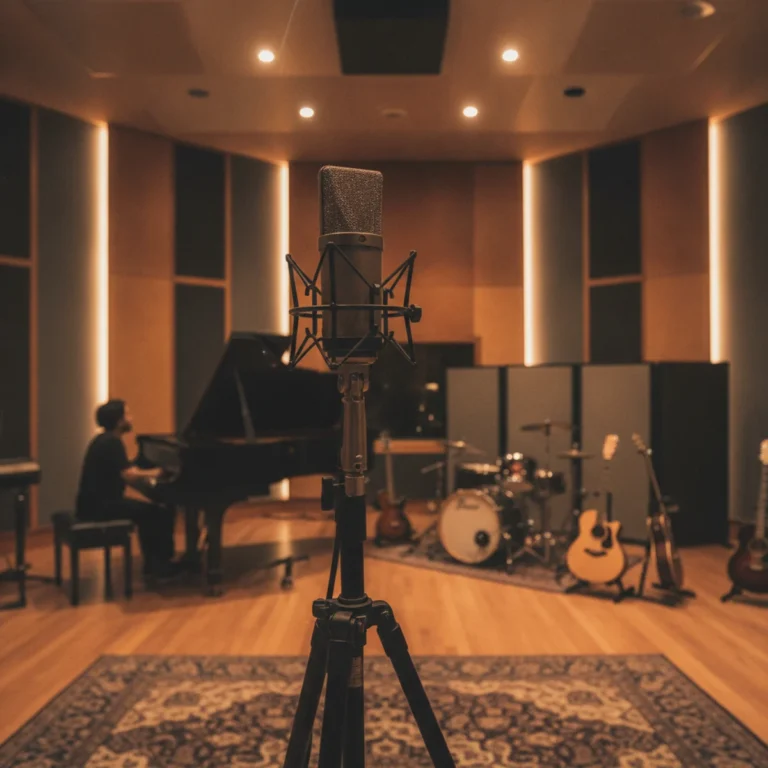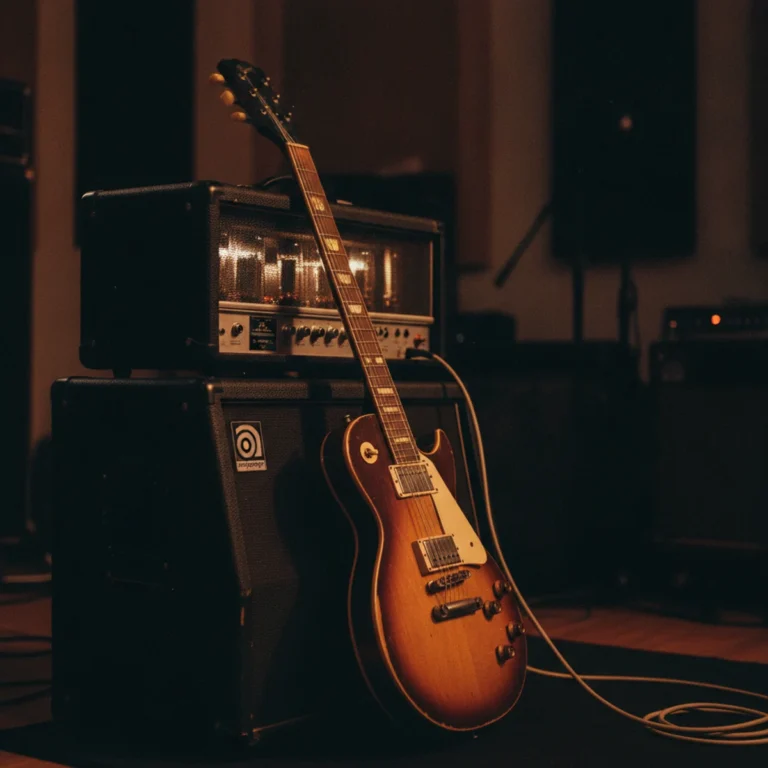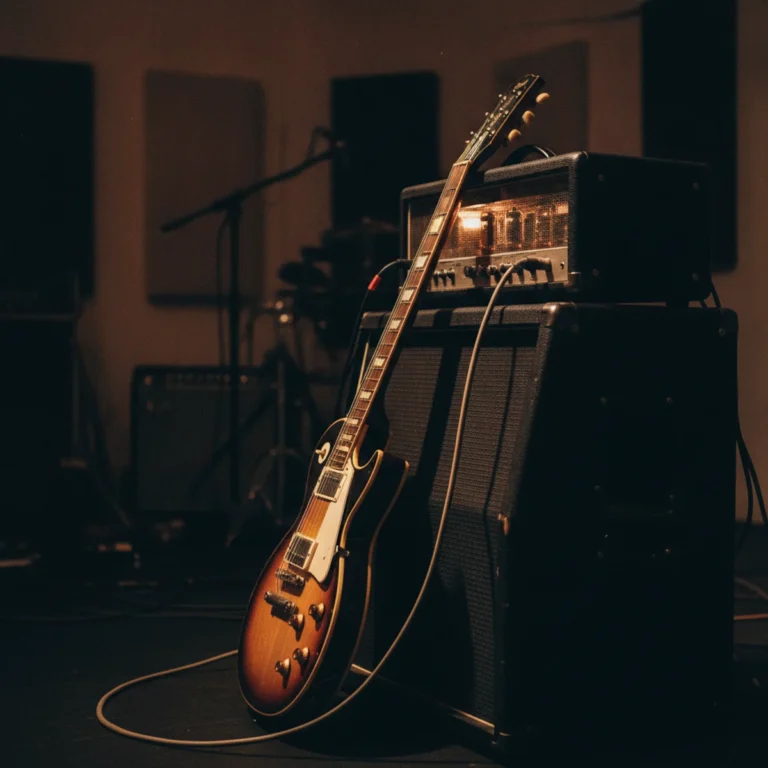
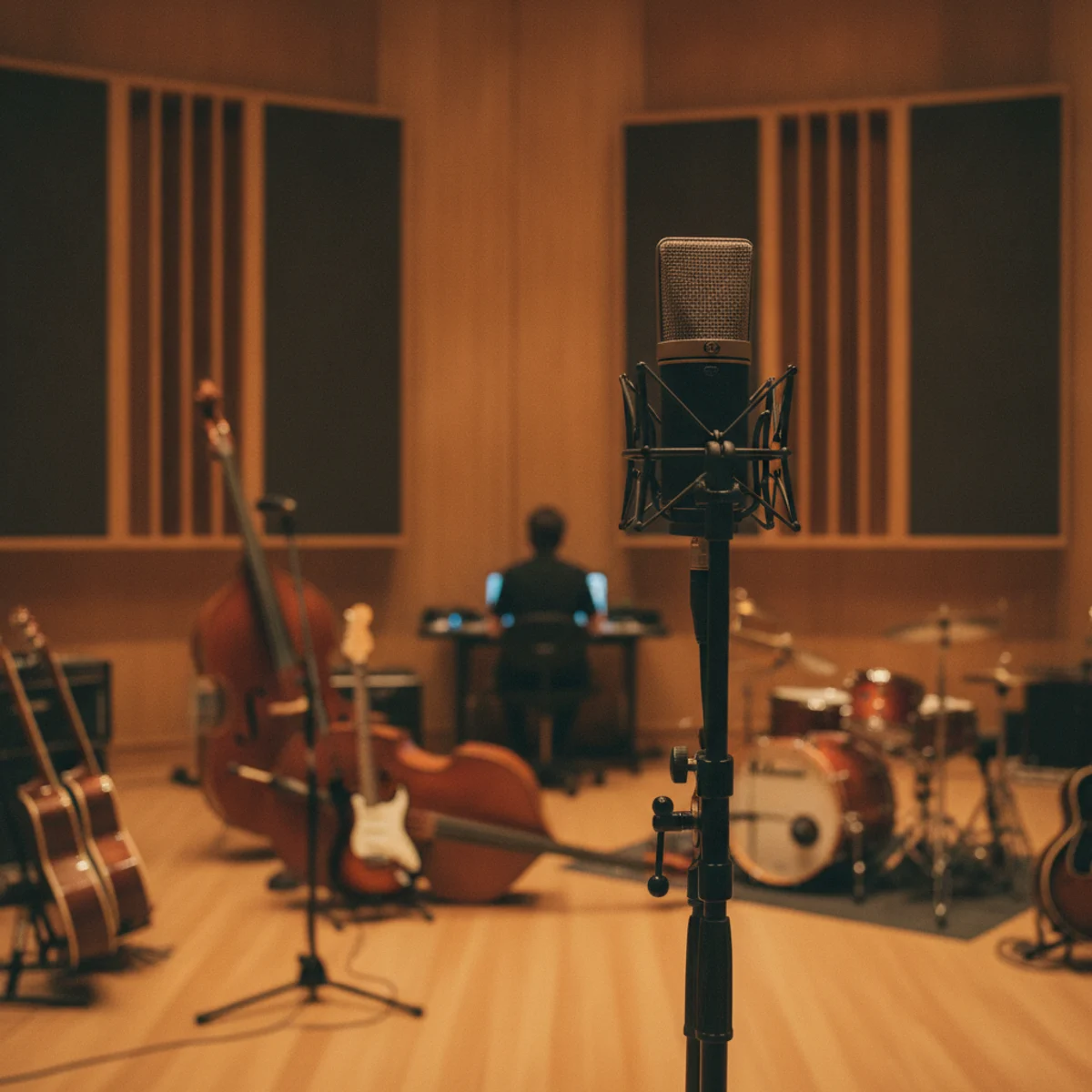
A guitar radiates different sound in every direction, so placement changes the instrument.
An acoustic guitar does not have one sound. It has a different sound at every position around it, and choosing a microphone position is choosing which instrument you record.
You can listen to our full playlist which contains the artist’s music, and know more about the artist’s work by scrolling down the page.

PLAYLIST
A Guitar Radiates Differently in Every Direction
An acoustic guitar is not a point source. It is a large, irregular vibrating body that sends different frequency content in different directions, and the differences are substantial rather than subtle.
Low frequencies leave the soundhole and spread broadly, so they are present almost everywhere around the instrument. High frequencies come predominantly off the top and the strings and are far more directional, so they fall away quickly as you move off-axis.
The consequence is that there is no single correct microphone position, only positions that capture different instruments. Moving the microphone twenty centimetres is not a fine adjustment. It is a change of source.
The Soundhole Is a Trap
The soundhole looks like where the sound comes out, and pointing a microphone directly at it is the most common beginner error in acoustic guitar recording. What emerges from the soundhole is dominated by a strong low-frequency resonance, typically somewhere near the bottom of the instrument’s range.
Recorded close and on-axis, that resonance overwhelms everything else. The result is boomy, undefined and difficult to fix, because the problem is not a broad tonal tilt that equalisation handles gracefully but a large peak in a narrow region.
The standard alternative is to aim at the twelfth to fourteenth fret area, roughly where the neck meets the body, at a distance of around twenty to thirty centimetres. That position gets string detail and body without sitting in the resonance.

Proximity Effect Is a Tone Control You Are Already Using
Any directional microphone increases low-frequency output as it gets closer to a source. At close distances on a guitar this is not a mild colouration; it can add a great deal of low end and change the character of the instrument entirely.
That is useful when you want it. A thin parlour guitar recorded close with a cardioid gains a weight it does not naturally have. It is a problem when it is unintentional, which is most of the time, and it interacts with every position change you make.
Omnidirectional microphones have no proximity effect at all, which is why they behave so predictably up close and why engineers reach for them on acoustic instruments more often than the popularity of cardioids would suggest.
Fingerstyle Asks for More Than Strumming Does
Fingerstyle playing puts specific demands on the recording that a strummed part does not. Independent bass and melody lines are happening simultaneously on one instrument, and they need to remain separable.
That argues for a position with good high-frequency detail, because the melodic content usually sits on the upper strings and needs articulation to stay distinct from the thumb-driven bass underneath. It also argues against heavy compression, which pulls the quiet melodic notes up into the bass line.
The playing noise matters too. In fingerstyle the sound of nails and flesh on wound strings is part of the instrument’s voice, not a defect. Recording positions that eliminate it entirely often produce a guitar that sounds oddly synthetic.

Two Microphones Multiply the Decisions
Adding a second microphone is the usual next step, and it introduces a phase relationship that can improve or destroy the recording. Two microphones at different distances from the same source produce comb filtering when summed, and on a guitar the effect is easy to hear.
The reliable configurations are the ones that control this. A coincident pair at the same point has no time difference at all and cannot comb. A spaced arrangement works if the spacing is generous enough that the interference lands outside the critical range.
The test is simple and should be done every time: sum the two microphones to mono and listen. If the guitar thins out or goes hollow, the relationship is wrong, and moving one microphone a few centimetres usually resolves it.
Position Is Cheaper Than Equipment
The strongest practical conclusion from all of this is that microphone placement is the largest available variable in acoustic guitar recording, and it costs nothing.
A moderately priced microphone in a well-chosen position reliably outperforms an expensive one in a poor position, and the gap is not close. Yet placement receives a fraction of the attention that equipment selection does.
The productive habit is to spend a few minutes moving the microphone while the player plays, listening on headphones, before committing. The instrument you find that way is chosen rather than accepted, which is the whole point.





About The Author