
Civil War Folk and the Resonator Guitar: What Foxy Leopard Lets Us Hear in Children of the War
A Quebec Writer’s Song About the People Left Behind After 1865, Built on Steel Strings
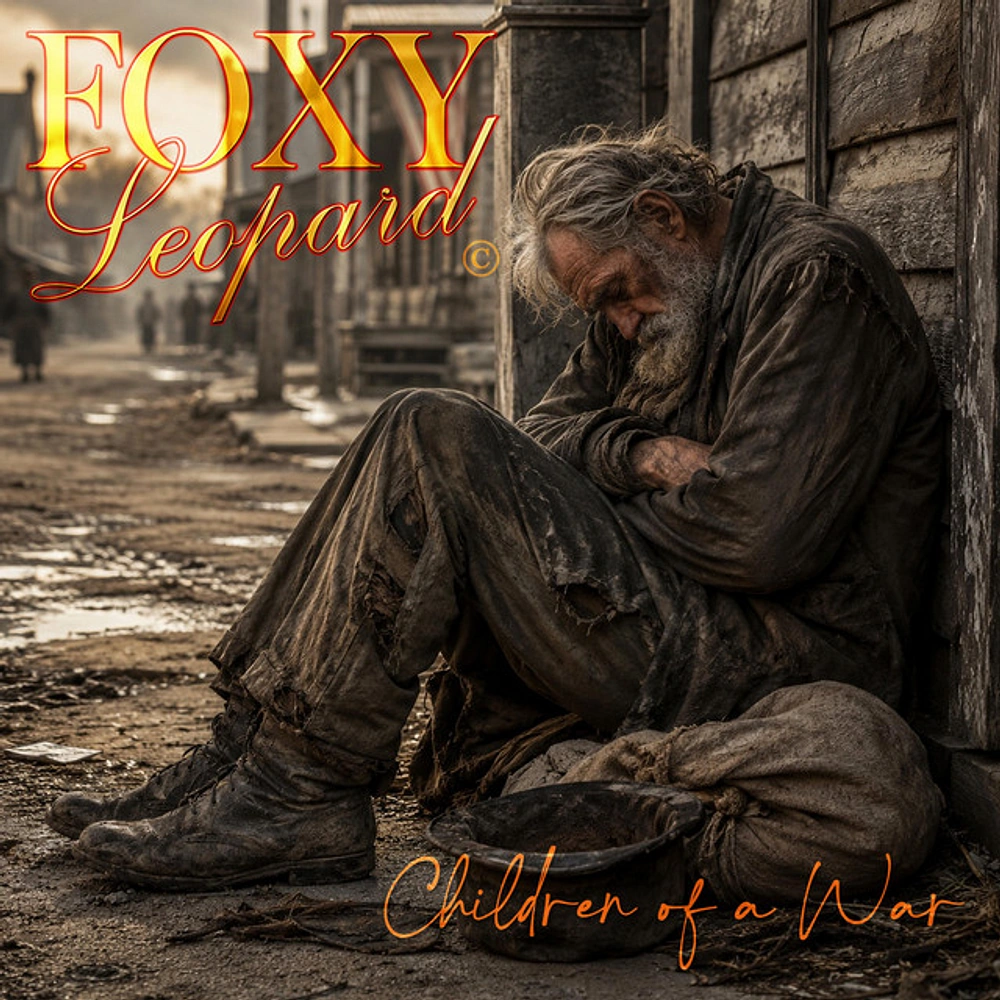
The first sound to listen for on Children of the War is the steel-body resonator guitar. It carries the song with a harmonica, restrained percussion and a raspy lead vocal. Meanwhile, a small children’s choir answers some of the central lines. Foxy Leopard released the single on 5 September 2026. It is the flagship song of the upcoming concept album After, which begins where the American Civil War ends. The instrument shows where this piece of civil war folk sits. The resonator guitar has a long history in exactly this kind of storytelling.
Foxy Leopard has Children of the War in the AcousticMusic.News acoustic and country blues playlist below, and every article on the project sits on the Foxy Leopard profile. Children of the War came to this desk through PopHits.Co Music Charts, which verifies independent artists and places their releases across its network of music news sites. Press play on the single, then read on for the history it draws on.

The Wave Behind Children of the War, From Civil War Ballads to the Resonator Guitar
Songs about the American Civil War are almost as old as the war itself. Patrick Gilmore wrote When Johnny Comes Marching Home in 1863, while the fighting still went on. Even then, the song looked ahead to the return home. Children of the War belongs to that tradition. It cares less about battles than about what the people at home carry afterwards.
Ken Burns brought that tradition back to a mass audience in 1990 with his documentary series The Civil War. Its fiddle theme, Ashokan Farewell, made a quiet acoustic tune the sound of the era for a generation of viewers. In other words, listeners have long heard the music of that war through acoustic instruments and plain voices.

A Century of Steel Strings, From National and Dobro to Civil War Folk Writing Today
The resonator guitar has its own lineage. Instrument makers in Los Angeles built the first National resonator guitars in the late 1920s, followed soon after by the Dobro. Their makers wanted to give acoustic players more volume before electric amplification. Delta blues players such as Son House and Bukka White then made the metal-bodied National part of the blues. Later, players such as Jerry Douglas made the Dobro central to bluegrass and modern Americana. As a result, the instrument arrives in any song carrying a hundred years of rural storytelling with it.
Children of the War uses that weight deliberately. The arrangement stays sparse, with resonator, harmonica and light percussion rather than the polished production of contemporary country radio. The children’s choir then does the job a chorus usually does. It answers the lead line and points the song toward its central phrase: “We’re all the children of a war.” In the song, those children are not only the young. They are anyone shaped by a conflict they did not begin or control.

Where Foxy Leopard Fits Among Civil War Folk Writers, and the Adjacent Acts on the Same Road
Foxy Leopard is a Quebec-based project with an unusual working method, and its creator describes it openly. On the project’s Spotify page, the creator explains that Foxy Leopard is a fictional act. The creator is a former professional DJ who writes the stories, lyrics, concepts and arcs. Modern tools, including AI, then help shape the performances and instrumentation, with the creator directing each song. Since 2025, that method has produced a multi-album narrative about characters before, during and after the Civil War. Singles such as I Haven’t Seen Enough and Cotton Fields came along the way.
That places Foxy Leopard alongside writers who use 19th-century America to talk about the present. Steve Earle wrote Ben McCulloch for Train a Comin’ in 1995. In it, a Confederate private sees how little the men giving orders share with the men who fight. Rhiannon Giddens has spent much of her career returning to the music and history of that century. Her work runs from the Carolina Chocolate Drops to Songs of Our Native Daughters in 2019. That record confronts the history of slavery through banjo-led folk. Both artists treat the past as a way to talk about ordinary people, which is the same move Children of the War makes.
How Listeners and Critics Have Heard Children of the War, and Where to Follow It Next
The response to the single has followed that line. Music Earshot described it as a story whose weight refuses to end when the fighting stops. It also noted the austere sound built from steel-body resonator guitar, restrained percussion, harmonica and a deliberately imperfect children’s choir. Rockera Magazine heard the same restraint, pointing to a stripped-back arrangement around a worn vocal and sparse resonator guitar.
For listeners, that adds up to a clear invitation. Children of the War suits anyone who follows story-driven folk, Americana and roots music. It also suits anyone who likes a song that reads like a short chapter from a longer book.
From the AcousticMusic.News Curator Team: “The resonator guitar does a lot of quiet work on Children of the War. It gives the song a century of rural storytelling in a single tone. That is why the arrangement can stay this bare and still feel full.”
Stream Children of the War on Apple Music and follow Foxy Leopard across platforms: Spotify, Apple Music artist page, YouTube channel and Facebook.









About The Author