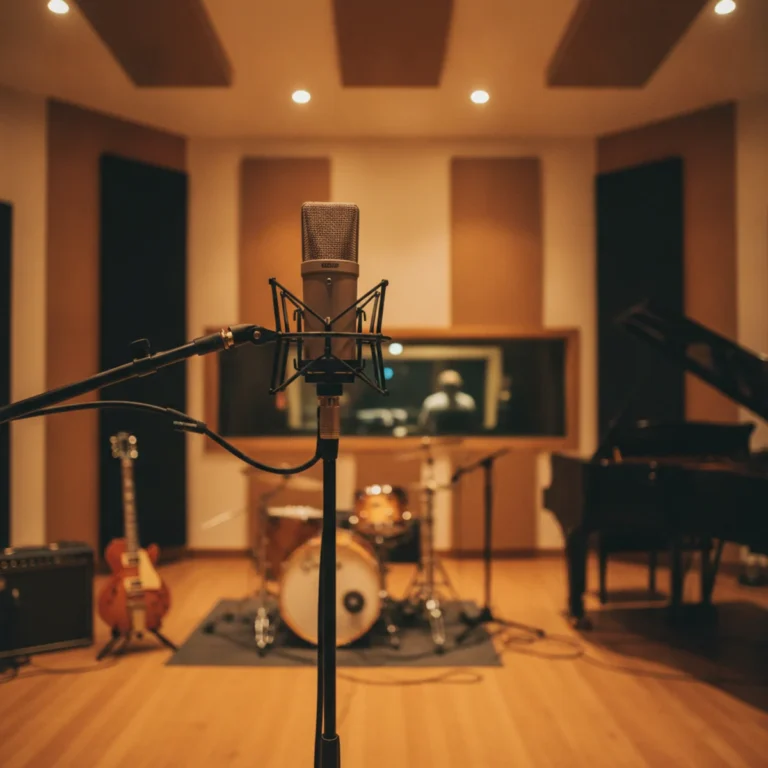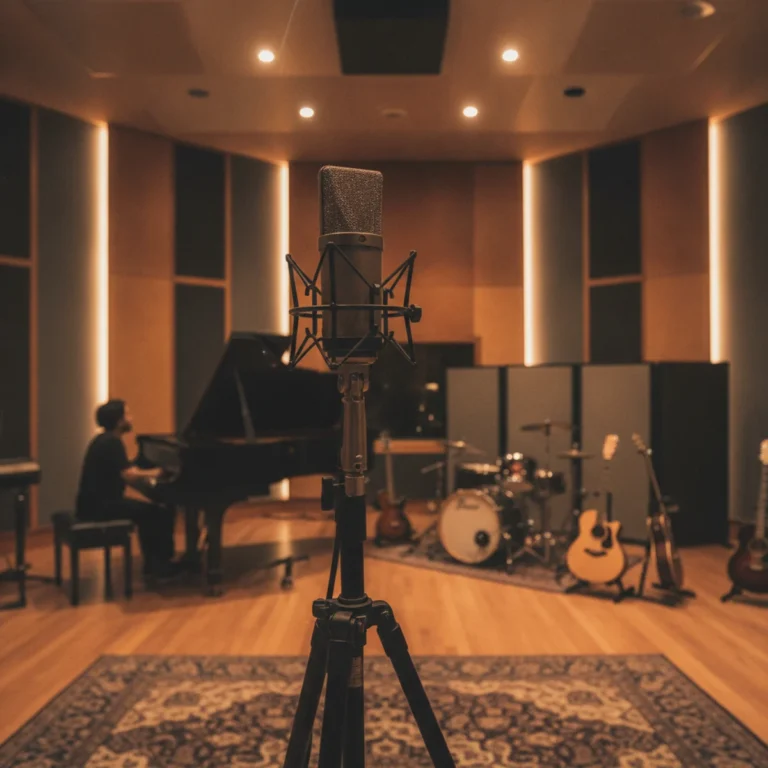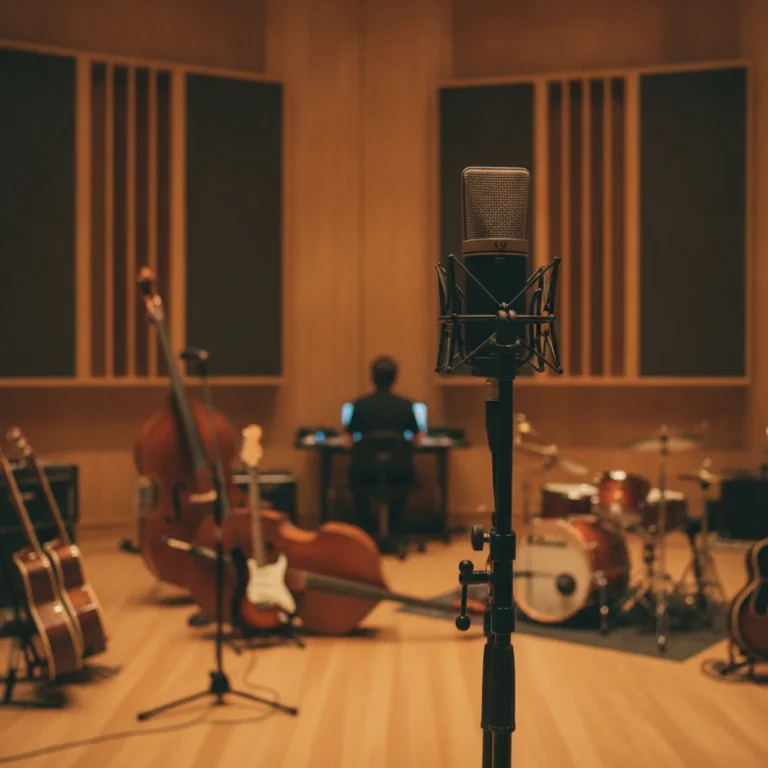
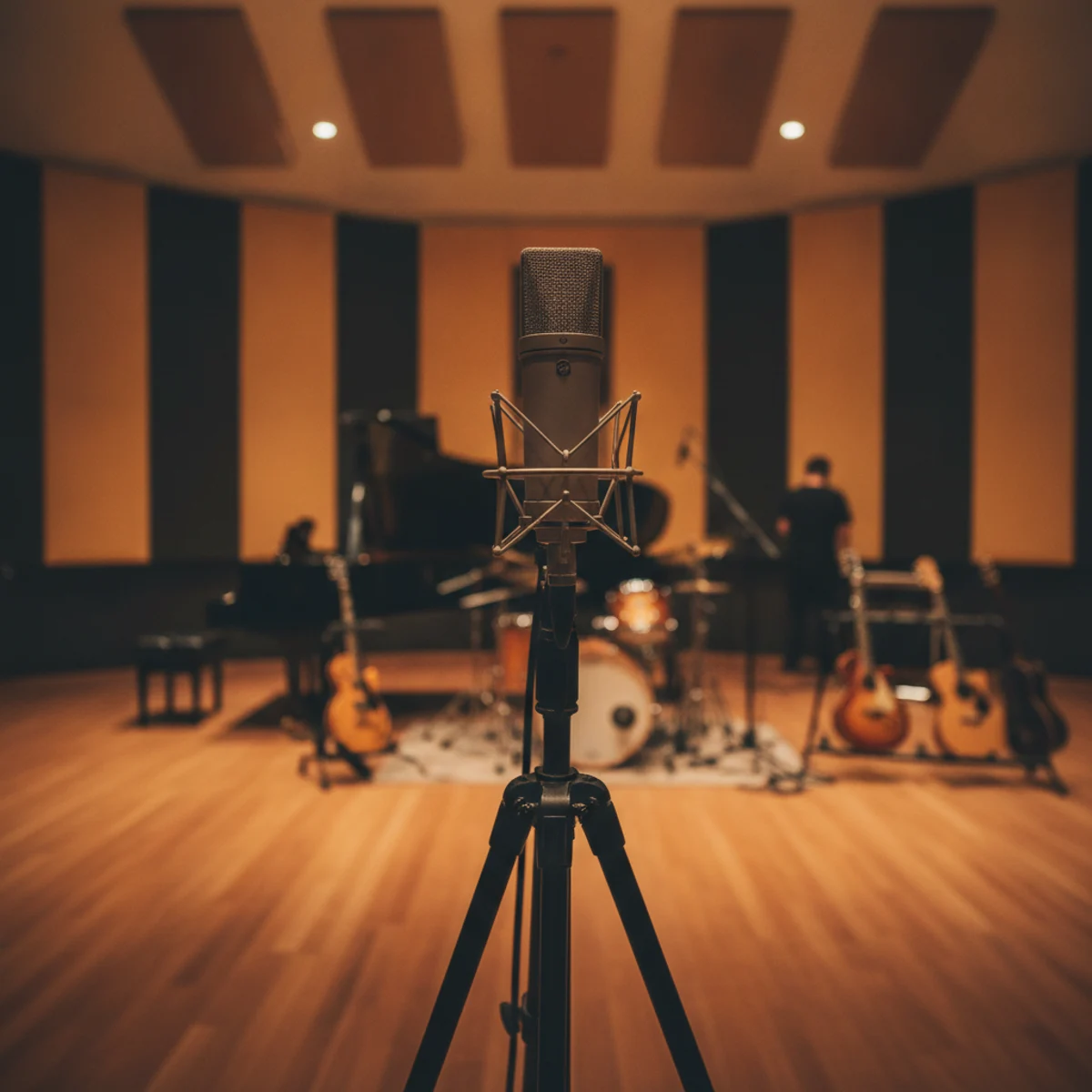
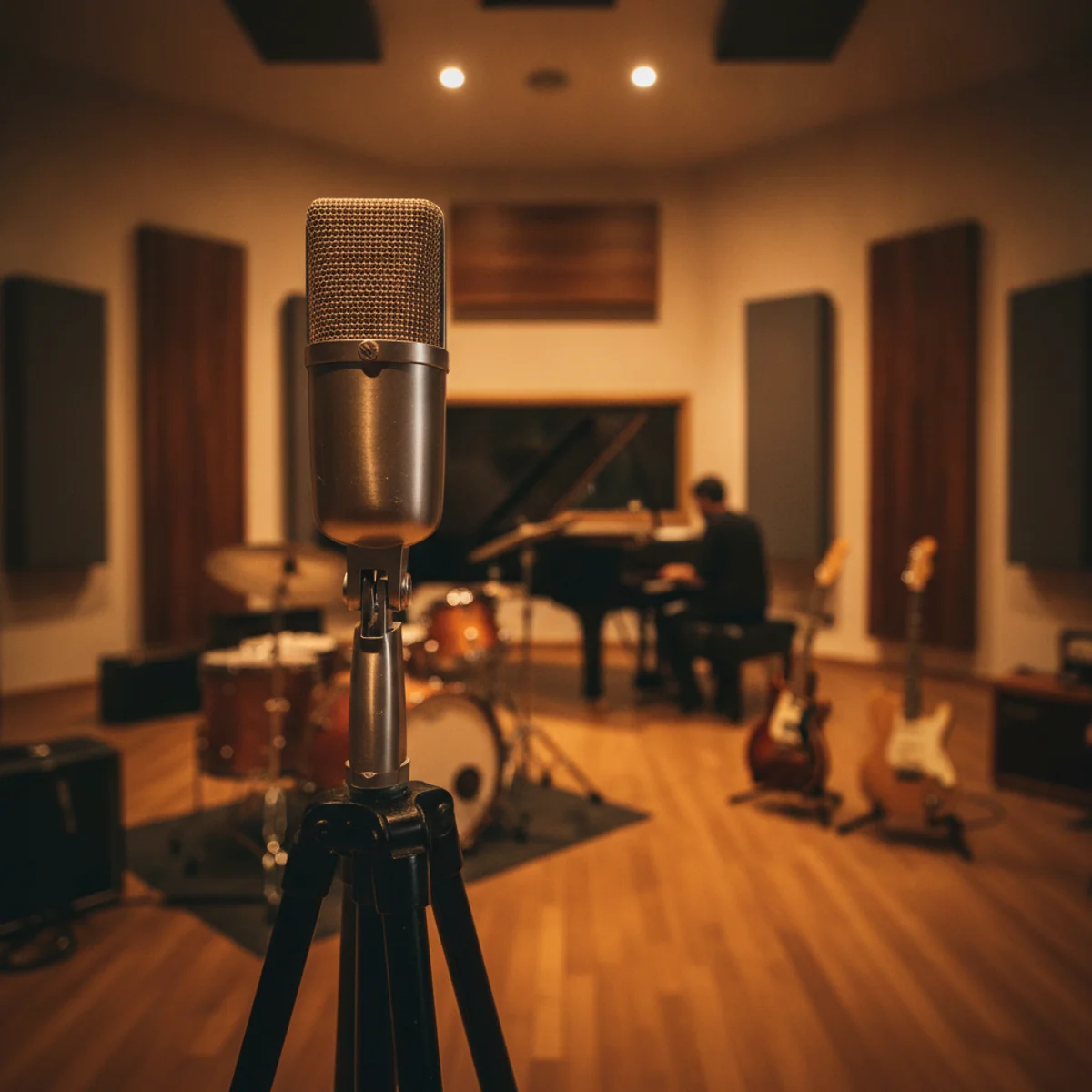
In acoustic recording the space is not background. It is a component you are choosing on purpose.
A violin recorded in a small dry room and the same violin in a hall are not the same sound. The instrument has not changed; the space has, and the space is roughly half of what you hear.
You can listen to our full playlist which contains the artist’s music, and know more about the artist’s work by scrolling down the page.

PLAYLIST
The Space Arrives Before the Note Does
Every sound you hear from an instrument in a room reaches you twice. The direct sound travels straight from the string or the soundboard to your ear, and then a much larger quantity of sound arrives afterwards, having bounced off the floor, the walls and the ceiling. The second category is bigger than most people expect. In a typical concert hall seat, the reflected energy substantially outweighs the direct energy.
That reflected component is not a blur added on top of a clean signal. It carries information. The delay before the first reflection arrives tells you how far away the nearest surface is. The rate at which the reflections decay tells you how absorbent the room is, which in practice tells you how large it is and what it is made of.
So the room is not an effect applied to the instrument. It is part of the sound the instrument makes in that place, and it arrives so quickly and so integrated that the listener never separates the two.
Small and Dry Is a Real Choice, Not a Compromise
There is a persistent assumption that a large reverberant space is the good option and a small dead room is what you settle for when you cannot afford better. That is not how experienced engineers treat it. A dry room gives you articulation, and articulation is the whole point in some repertoire.
Close, dry recording puts the listener at an impossible distance, closer to the instrument than any audience member could sit. That is an artificial perspective and it is also an intimate one. A great deal of folk and singer-songwriter recording depends on it, because the small sounds of playing become audible.
The finger sliding on a wound string, the breath before a phrase, the body of the guitar resonating against a chest. In a hall those details are gone by the time the sound reaches a microphone twenty feet away. In a small room they survive, and they are frequently the reason the record is affecting.
Reverberation time is the single measurement that predicts most of this. It describes how long sound takes to decay by a fixed amount, and knowing a room’s figure tells you immediately whether dense material will stay articulate in it or turn to mud.

What a Hall Gives You That You Cannot Add Later
Artificial reverberation has become extremely good. It is now genuinely difficult to identify a well-programmed convolution reverb by ear in isolation. What remains difficult to fake is the relationship between the instrument and the room, because a real player adjusts to a real space.
A cellist in a live hall plays differently. They shorten notes because the room sustains them. They articulate harder because the room softens attacks. They pace phrases against the decay they can hear. All of that is baked into the performance before any microphone is involved.
Add reverb to a performance recorded dry and you get a dry performance in a wet space, which is a slightly incoherent object. The player was not responding to the room you have given them, and skilled listeners tend to notice something is off even when they cannot name it.
The Floor Is the Reflection That Matters Most
Of all the surfaces in a room, the floor is usually the one doing the most audible damage, and it is the one most often ignored. It is close, it is large, and it is typically hard. A reflection off the floor arrives only slightly later than the direct sound.
When a delayed copy of a signal is added to the original at a short delay, the result is comb filtering: a series of regularly spaced cancellations and reinforcements across the frequency range. That is the source of the hollow, phasey quality that makes an otherwise good take unusable.
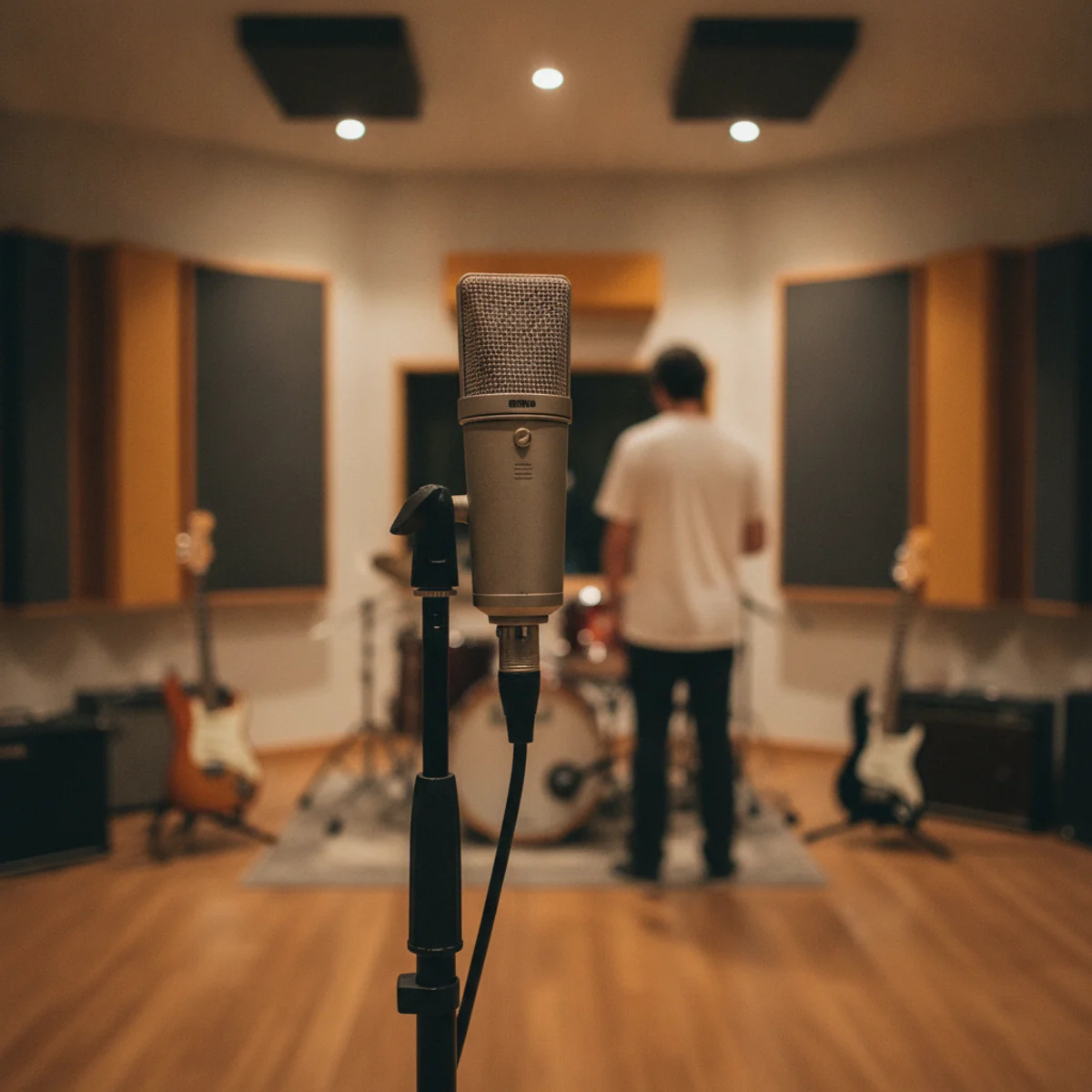
The practical remedy is unglamorous. A rug between the instrument and the microphone, or a low absorptive panel on the floor, removes the strongest early reflection and often improves a recording more than a different microphone would. It is the cheapest meaningful upgrade available in most rooms.
Portable treatment has made small rooms far more workable than they were. A few absorptive panels placed at the first reflection points, and a rug on the floor, remove the worst of a domestic room’s problems for very little money.

Distance Is the Control You Actually Have
Microphone position is discussed as though the important variable is angle. In practice the variable that changes the recording most is distance, because distance sets the ratio between direct sound and reflected sound.
Move closer and the direct sound dominates, so you get detail, presence and less room. Move further away and the reflected sound gains, so you get blend, context and less definition. There is a distance at which the two are equal, and it is a useful reference point to find by ear in any given space.
Because it is a ratio, the same distance produces different results in different rooms. Three feet in a small treated room is a close sound. Three feet in a stone church is still fairly close but already carries a great deal of the building. The number alone means nothing without the room.
Choosing the Space Is an Editorial Decision
Once you accept that the room is a component, selecting it becomes part of the interpretation rather than a logistical step. A solo baroque violin programme and a contemporary fingerstyle guitar record want different buildings, and the difference is not a question of quality.
Early music generally benefits from a live, stone-walled acoustic, because the repertoire was written for those spaces and its harmonic rhythm is slow enough to survive a long decay. Dense contemporary material in the same room turns to mud, because each new chord arrives before the last has cleared.
That is why professional acoustic recording so often happens in churches, halls and unusual buildings rather than purpose-built studios. The engineer is not looking for a neutral space. They are casting one, and the space they choose is as much a part of the record as the instrument.
Recording in an unusual building carries logistical costs that are easy to forget. Power, noise from outside, access hours and the absence of a control room all have to be solved, which is why these sessions are planned around the building rather than the calendar.


About The Author