The Room in the Recording: Daniel Casares Played Every Part of 1971 Live in His Galician Studio
A Berklee-Trained Guitarist Plays Sax, Drums, Bass and Keys Himself, with No Edits
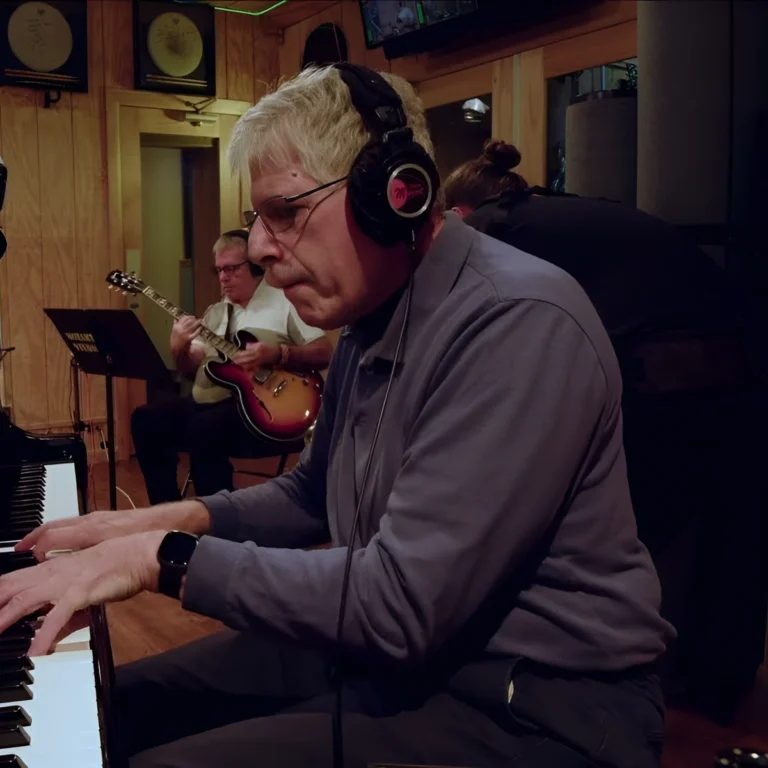
Daniel Casares recorded 1971 in a room called 1976 Studio, his do-it-yourself studio in rural A Coruña Province. The sessions ran from December 2024 to February 2025. The Galician guitarist played every part himself, from the drums to the alto saxophone, with no audio editing or MIDI programming. So the ten-track album, out on HOUT Records since 10 October 2025, is jazz fusion made by one musician who recorded himself as a band.
Daniel Casares’ Comet sits in the playlist below with our contemporary jazz and nu-jazz picks, with the rest of the coverage on Daniel Casares’ artist profile. 1971 reached AcousticMusic.News through PopHits.Co Music Charts, which verifies independent artists and places their releases across its network of music news desks. Listen to the album, then keep reading for how one musician recorded it.

Daniel Casares Recorded 1971 Alone in His A Coruña Studio, One Live Part at a Time
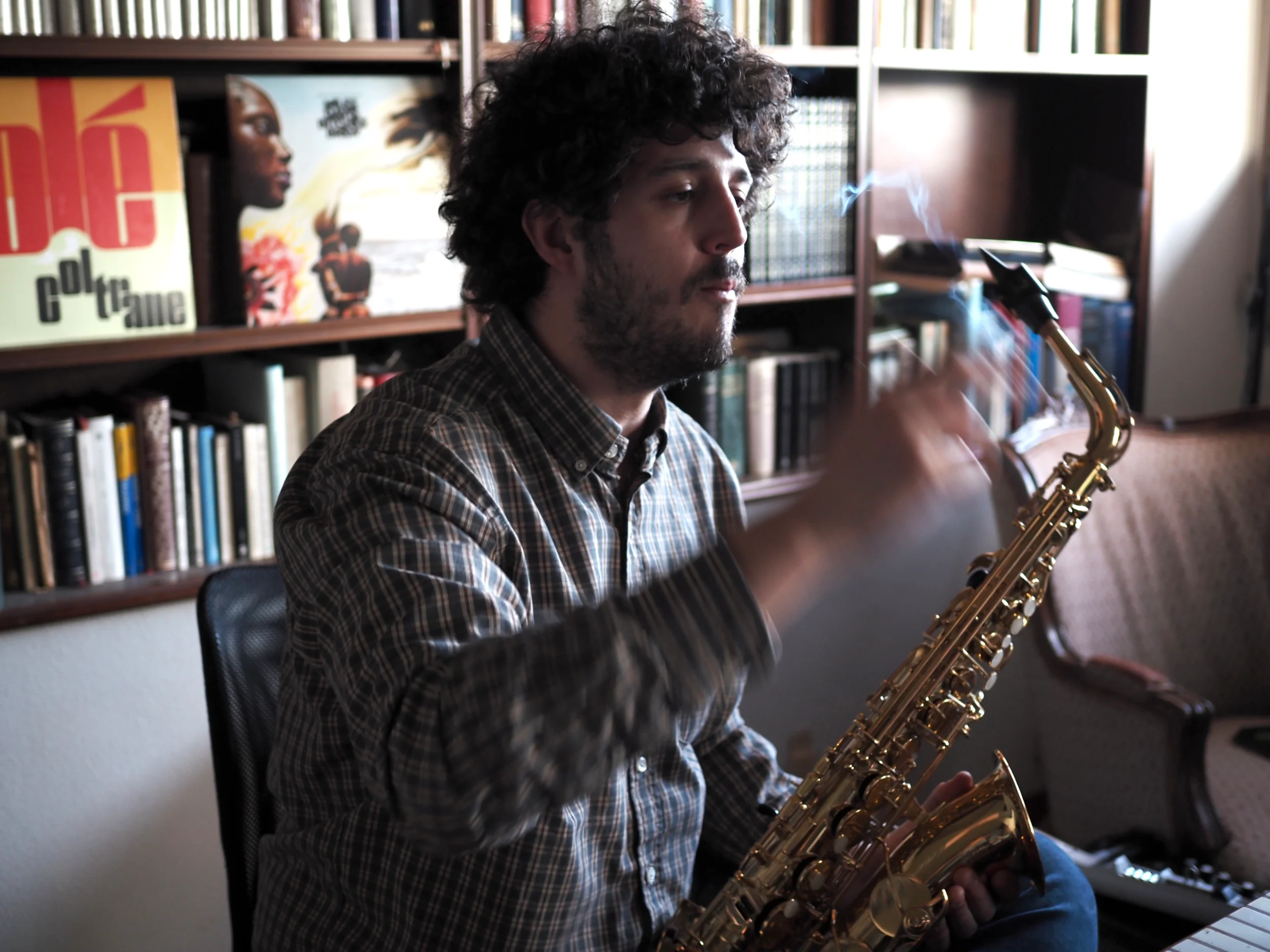
Casares built the ensemble out of his own hands. He played the drums on a Ludwig Questlove kit with Zultan cymbals and the bass on an Academy electric. Then he added guitar on an 80s Gibson ES-335 ’58 Reissue, the instrument he lists first among his gear. An alto saxophone by Lux, assorted percussion and samples fill out the room.
The keyboards came through a Casio MIDI keyboard into Native Instruments Kontakt. That setup supplied most of the synth bass, the synth leads and pads, the electric piano and the clavinet. It also gave him electronic percussion and ambient textures. The detail matters, because he sequenced nothing: he played even the clavinet and the synth bass by hand.
On his own site, Casares describes the approach as using the studio as a band, and as composition through improvisation. In other words, the rhythm section on 1971 is a band whose members never played at the same moment. Every one of them is Casares, arriving one take at a time.

The Written Melodies and the Slow Improvisations Behind Every Track on 1971
Casares wrote only the melodies in advance. He improvised everything else slowly, on the spot, along a narrative arc he set for the whole album. The improvised solos move between alto saxophone, keyboard and electric guitar. Underneath, the harmonies stay mostly modal, with some modern and tonal passages. Modal writing gives an improviser long stretches on a single harmonic colour. That suits a player building a performance part by part.
AcousticMusic.News Curator Team: “We placed Comet in our playlist because it shows how much ensemble feel one musician can capture alone in a room. It also opens an album built on a rule most studio records break.”

Why Daniel Casares Named It 1971, From Miles Davis in the Studio to Weather Report’s Debut
The title names a year. 1971 sets out to capture the spirit of jazz at that moment, when fusion was still raw and experimental. At the same time, it gives that spirit a forward-looking spin. Casares found those records young, while exploring beyond the classic rock he grew up on. He came across Miles Davis‘ Bitches Brew and In a Silent Way, Soft Machine’s Third and the early Weather Report albums.
The contrast with those records is where 1971 becomes interesting. Davis recorded In a Silent Way in a single session on 18 February 1969. Afterwards, producer Teo Macero edited and arranged the tapes into the album. Weather Report released its debut album in May 1971, the year in Casares’ title. 1971 takes the opposite route to the Davis records, so what Casares played is exactly what the listener hears.
The running order moves the way a live set might. Comet opens the album at just over three minutes. Next, Melted stretches past six. Interlude then gives the record a short breath at its midpoint, before Mad and the six-minute Red Blues. Finally, Grey Sky, Amsterdam Bike Ride and Many Moons bring it home.
From Berklee and Wally’s Jazz Cafe to His Own 1976 Records Label
Casares came to this through a long apprenticeship. He studied at Berklee College of Music from 2014 to 2018, with mentors including Terence Blanchard and Kenny Werner. In Boston he led a weekly set at Wally’s Jazz Cafe. After graduating, he worked as a sideman in New York, and then he moved home to Galicia in 2019. He has since performed with Dave Holland and Terence Blanchard. He also made his first album as a leader, Idleness (2021), the same way, playing every instrument himself.
1971 is his second full-length release for HOUT Records, after From a Cabin in the Woods in 2023. Today he also runs his own label, 1976 Records. In April 2026 it issued Sounds of a Digital City, now on Spotify.
If you know the early Davis fusion records and the first Weather Report albums, this is that era’s freedom heard through one musician in one room. Start with Comet, and then let the album run to the end.
Hear 1971 on Apple Music or buy it on Bandcamp. Follow Daniel Casares on Spotify, Apple Music, YouTube, Instagram, LinkedIn, and the official site.



About The Author