

Zsolt Kaltenecker Turns Recorded Improvisations Into Meridian, a Neoclassical Piece Scored for Solo Piano
After Jazz, Fusion, Prog Metal and the Seaboard, One Piano Carries a Three-Minute Melody
One instrument plays on this record, and one person is behind every part of it. Zsolt Kaltenecker wrote Meridian, played it on acoustic piano and engineered the recording, then released it on 29 September 2026. The pianist and composer is based in Los Angeles, United States.
Zsolt Kaltenecker is in the playlist below with Meridian, and the Zsolt Kaltenecker artist profile gathers the coverage in one place. The single came to this desk through PopHits.Co Music Charts, which verifies independent artists and places their releases across its network of music news titles. Press play first, then read on for how one piano carries the whole piece.


That is the craft worth following, because of how the piece came to exist. Every composition in Kaltenecker’s solo piano project begins as a recorded improvisation. Only then is it written out, note by note. The project started in the summer of 2025. Meridian is one of its singles, a neoclassical piece with no other instrument beside the piano.

Meridian Rests on One Melody and the Space Around It, Played on a Single Acoustic Piano
Start with the hook, because a solo piano piece has nowhere to hide one. Kaltenecker describes Meridian as a personal study of melody and space. On a single piano, that means the gaps between phrases carry as much weight as the notes. The phrasing matters just as much, and so does a calm that holds from the opening bars to the last.
The record that first pulled Kaltenecker towards jazz was improvised from start to finish. In January 1975, Keith Jarrett arrived at the Cologne Opera House to play a solo concert. Instead of the concert grand he had asked for, a small rehearsal Bösendorfer stood on stage. It was thin at the top and weak at the bottom. So he kept to the middle of the keyboard, with rolling left-hand figures to cover the missing low end. The Köln Concert became the best-selling solo album in jazz history. Even so, Jarrett refused for years to publish it as sheet music, because the music belonged to one particular night. He agreed to an authorised transcription only in 1990. Even then, he told pianists to treat the recording as the final word.
On Meridian the order runs the other way. The improvising stays in private, and the piece that reaches listeners is the written one.

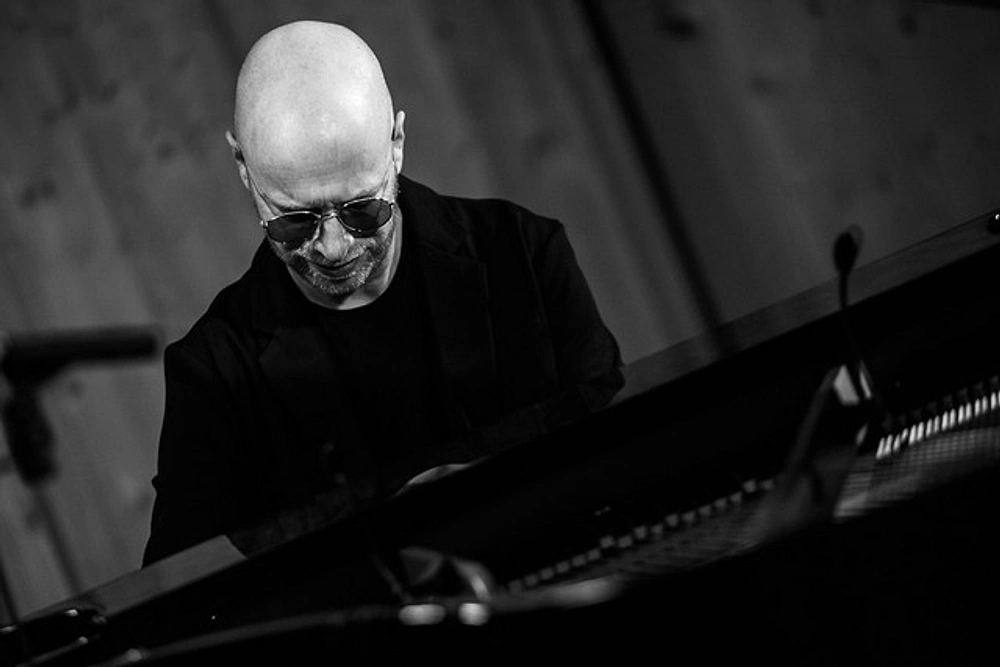
Where the Melody Sits in Zsolt Kaltenecker’s Meridian
The title points at a single line. A meridian runs from pole to pole, and it also marks the sun at its highest point in the day. So the name suits a piece this focused on its melodic line. There is nothing on the record except the piano, which leaves the melody to do all of the talking. The phrasing decides how it lands.
Nord Keyboards, which lists Kaltenecker among its artists, describes playing in which each hand works independently of the other. A solo piece is the plainest place to hear that, with no band to share the work.
Meridian Runs Three Minutes and Six Seconds, the Ninth Single in a Year of Releases Since Contact
Then the structure, which reaches past one piece. Zsolt Kaltenecker released Meridian almost a year to the day after Contact, an eleven-track album that came out on 30 September 2025. It is the ninth single since then. Shelter came in November 2025, and a new single has followed roughly every five or six weeks since. The run went Magic Hour, Page 39, In Times Past, Skyey, Tree of Life, Venture Out and Morning Bells. After that, Music Box followed Meridian on 3 November 2026.
Most of those singles stay short, and Meridian sits near the long end of the run. The pieces also live on paper. Kaltenecker sells PDF scores for solo piano, among them Skyey, In Times Past, Danzón and Disconnect. That way, other pianists can play the music themselves.
The run is also heading somewhere. A second album is due around January 2027, with several of the singles and some new pieces on it. On 8 January 2027, Kaltenecker plays a first neoclassical piano concert at the House of Hungarian Music, billed as the launch of Contact.
The Records Zsolt Kaltenecker Made Before Meridian
The catalogue behind those singles is long. Born in Budapest, Hungary, in 1970, Kaltenecker started classical lessons at eight. A degree in jazz piano from the Franz Liszt Academy of Music followed in 1996. That autumn brought private study with Jaki Byard in New York, in the United States. The first album, Ivory Tower, came in 1997. Two years later, Songs From the 20th Century was named the Hungarian jazz record of the year. Since 2000 the albums have also come out in Japan.
Jazz has been a starting point rather than a home. From 2003 the synthesizer became the main instrument, and the work has run through electronic music and trip-hop as well as jazz. Later came the 1705 trio with András Dés and Béla Piri. There were also keyboards in the progressive metal band Special Providence, and a duo with Tamara Mozes. That duo’s 2025 album, Sub Rosa, was built around the Seaboard, the pressure-sensitive keyboard that now shapes much of Kaltenecker’s own sound.
Electric and Acoustic, From Chick Corea’s Two Bands to Meridian
The other music that turned Kaltenecker towards jazz shows how the two sides can run together. Chick Corea founded the Elektric Band in New York in 1986 and led it from the keyboard. Then he cut it down to a trio, the Akoustic Band, and kept both going at once. Corea made ten albums for GRP Records between 1986 and 1994. Seven were with the Elektric Band and two with the Akoustic Band. Kaltenecker works the same way, moving between the Seaboard and the acoustic piano, and Meridian comes from the acoustic side.
From the AcousticMusic.News curator team: “We placed Meridian in our Modern Classical, Minimalist, Neoclassical playlist for one reason. It sounds found at the keyboard, even though every note is written down.”
So a career spent across jazz trios, synthesizers and prog metal comes back to one instrument and one person. Meridian needs nothing more.
Hear Meridian as a single on Spotify or Apple Music. Follow Zsolt Kaltenecker on Instagram, TikTok, Facebook and YouTube, and find the solo piano scores on Gumroad.












About The Author