

The Room in Ti: Colorful Door Keeps a Lost Love Between the Sentences
An Austrian Songwriting Project Turns a Door That Never Opened Into a Bosnian Love Song
There is a door in Ti that never opened. Midway through this indie folk single, the narrator tells a woman that she never left. She only stopped knocking on a door that was never going to open. Colorful Door, the project of the songwriter and poet Ramo Kurtović, released Ti on 30 October 2026. The project is based in Vienna, Austria.
Colorful Door is in the playlist below with Ti, and the Colorful Door artist profile collects the network’s coverage. The single came to this desk through PopHits.Co Music Charts, which verifies independent artists and places their releases across its network of music news titles. Press play first, then read on for how the song is written.

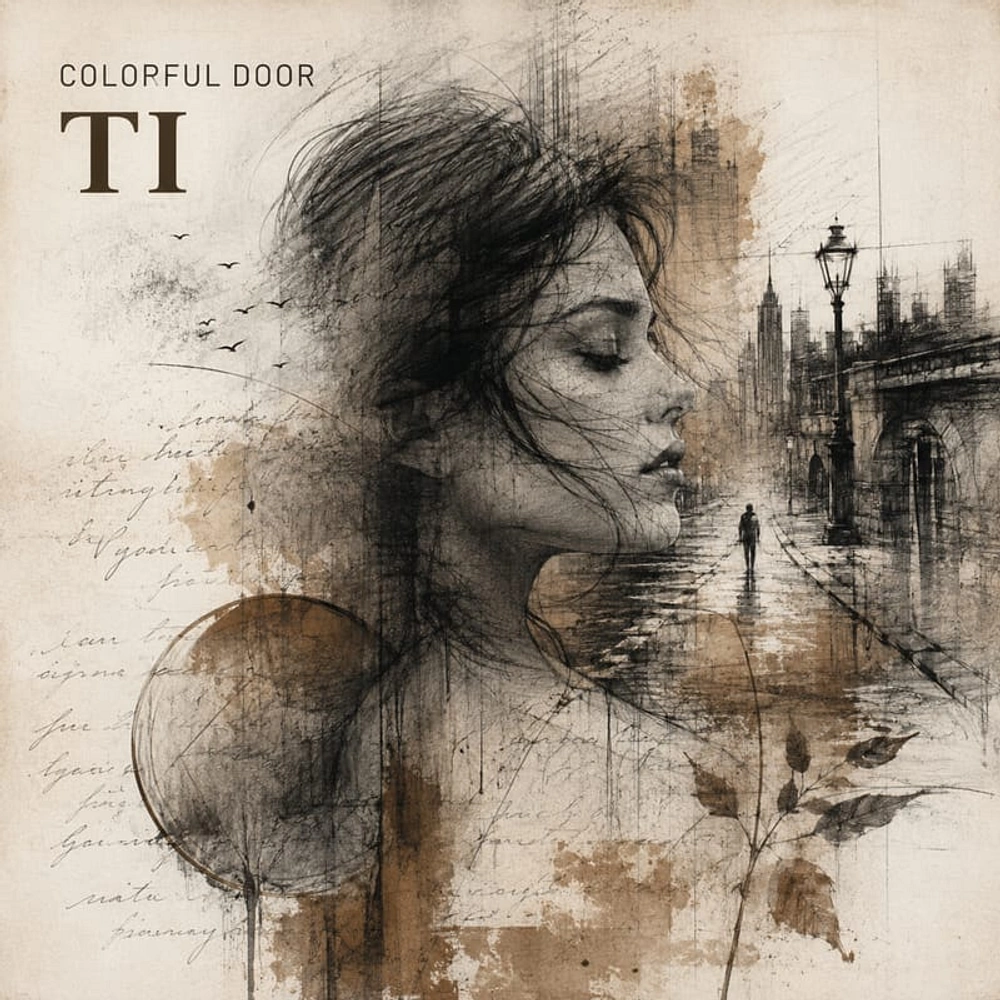
The title means “you” in Bosnian, the language of the lyric. The whole song is built around that one word. Kurtović wrote and produced Ti with Edd Wood, the other half of the duo DULDU, and plays the guitar on it. So the craft to follow is the writing: the hook, the lyric and the way the song is put together.

Colorful Door Puts the Hook of Ti on the Title Word, With a Lost Love Living Between the Sentences
Start with the chorus, because that is where the title lands. It opens on two words set on a line of their own, A ti, and you. Then comes the image the song keeps. Još živiš između mojih rečenica: you still live between my sentences. The next line adds a light in empty streets that nobody switches off.
That is the room in Ti. The lost love has no house in the lyric and no street of her own. She lives in the gaps a writer leaves. Sentences are also where Colorful Door’s songs begin. In the project’s journal, Kurtović describes a writing day. It starts with a walk and short notes at a café table. Back home come the laptop, the recording software and a trial vocal, recorded, deleted and recorded again. Sometimes, the entry says, one sentence changes the whole direction of a song.
The Refrain of Ti Sits in the Sevdah Tradition of Unanswered Love
The second half of the hook answers it. Neke ljubavi ne umiru, the refrain runs, samo nauče da šute. Some loves do not die; they only learn to keep quiet. That idea is old in Bosnian music. Sevdalinka, the traditional Bosnian love song, takes its name from a Turkish word for being in love. Above all, the word means the forlorn longing of a love that goes unanswered. The genre is also called sevdah, and in 2024 it joined the UNESCO list of the Intangible Cultural Heritage of Humanity.
One of its leading modern interpreters, Amira Medunjanin, was dubbed Bosnia’s Billie Holiday by the writer Garth Cartwright. Her debut album, Rosa, came out in 2005. Colorful Door has walked that path too, with the single Sevdah in 2025 and the Folklore EP in 2026. With Ti, Colorful Door takes up the same subject, a love that has gone quiet.


The Lyric Reads Like a Notebook of Short, Plain Sentences
Then the lyric itself, which is where the poet shows. The song opens on a run of single lines that each stand alone, like entries in a notebook. Some words hurt only when you say them to yourself. The best things happen when nobody is watching. Then comes samo jedan ton, jedan dah, jedna misao: just one tone, one breath, one thought.
Only after that does the story begin. Ipak, sve što nisi kazala, opet me pronađe: still, everything you never said finds me again. Then come the door and the confession at the centre of the chorus. Još učim kako da zaboravim ono što nikad nisam imao: I am still learning how to forget what I never had.
That route from page to song has a famous precedent. Leonard Cohen was a poet and novelist before he made records. Suzanne first appeared as a poem in his 1966 book Parasites of Heaven. Judy Collins recorded it that same year, and it became Cohen’s debut single from Songs of Leonard Cohen in 1967. Kurtović also works in both forms. A poetry collection, EXIT, came out in 2025, and FRAGMENTI, short stories and essays, followed on 10 September 2026. The opening lines of Ti read like fragments of that second book.
Ti by Colorful Door Lasts Three Minutes and 58 Seconds, Built From Aphorisms, Two Choruses and a New Ending
Next, the structure, which is where the song does its quiet work. Ti runs three minutes and 58 seconds. Its first verse is the run of single lines, and its second verse returns to that form with new ones. One says you were not blind; you only saw what you wanted to be true. Another says the heart always runs late behind the head.
The two choruses are almost the same, and the difference is the point. The first time, the narrator is still learning how to forget. The second time, the narrator is still running from the same silences, from all the unfinished days that still hurt. Then the refrain changes its ending. The first one closes with the loves living on in us, without us. The last one lets them stay behind to remind us.
That is a measured piece of writing for a catalogue that moves fast. Colorful Door has released music since Tajna in September 2021, including the albums Source and Ha?. This year alone brought the album #OK and five singles before Ti, the last of them KAD SE POGLEDI SRETNU in September. The visualiser for Ti is on the project’s YouTube channel. The journal has already announced the next single, Najvoljenija greška.
From the AcousticMusic.News curator team: “We placed Ti in our Acoustic Folk, Soft Folk, Chamber Folk playlist for its refrain. A love that learns to keep quiet is a wistful folk idea, and the song lets plain sentences carry it.”
So the door in Ti stays shut. What Colorful Door leaves on this side of it is a song made of sentences.
Hear Ti on Spotify and Apple Music, read the full Bosnian lyric on Bandcamp, and find every link on Linktree. Follow Colorful Door on Instagram, Facebook, YouTube and SoundCloud, and visit the project’s website.














About The Author