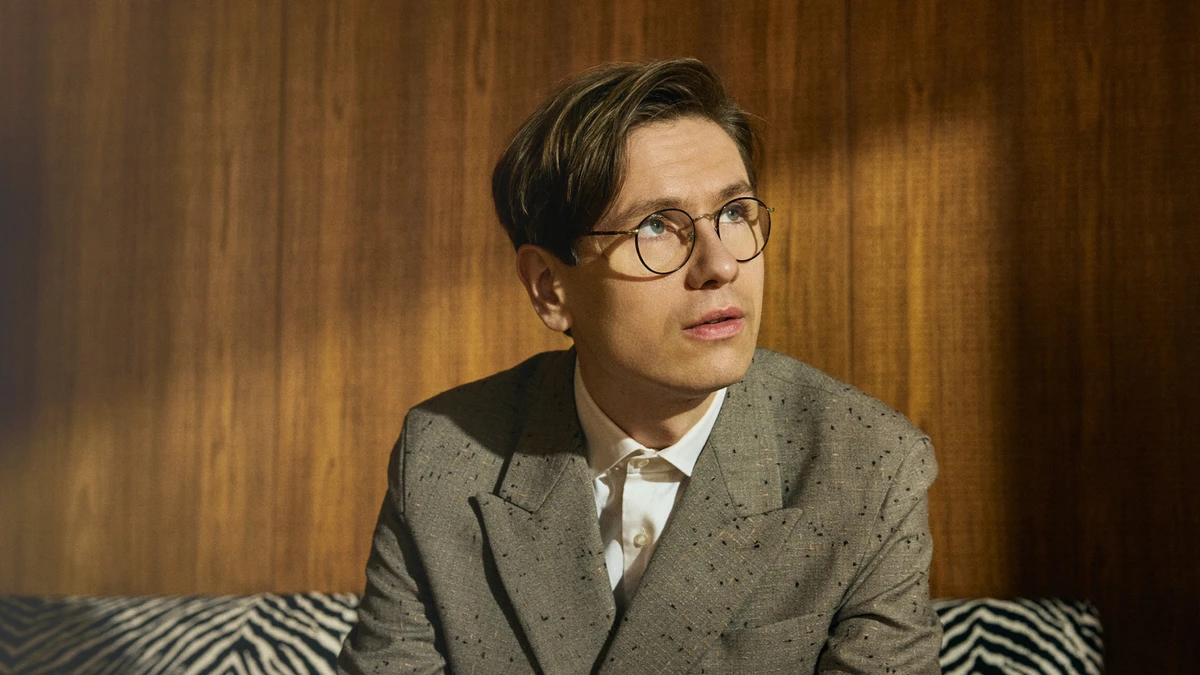
The encore was a small thing after a big concerto. Following a full-blooded Brahms First, Víkingur Ólafsson sat back down at the Steinway and played the Largo from Bach’s Keyboard Concerto in F minor, BWV 1056, while a dozen or so string players from the Berlin Philharmonic accompanied him in pizzicato. It was a plucked frame around a single singing line, and it closed the first half of a night that was never meant to be his.
Ólafsson is touring with the Berliner Philharmoniker and its chief conductor, Kirill Petrenko, in place of Daniil Trifonov, who withdrew from the orchestra’s autumn concerts to recover from an injury. The programme stayed exactly as planned: Brahms’s Piano Concerto No. 1 in D minor in the first half and Richard Strauss’s Also sprach Zarathustra in the second, taken from Berlin to New York and on to South America.
How the Change Was Made
The switch was announced in mid-September. According to The Violin Channel’s report on the withdrawal, Trifonov said he had been injured in an accident at home in early August, and that while his recovery was going well, he could not yet return to the stage. The orchestra said it was grateful to Víkingur Ólafsson for standing in, wished Trifonov a speedy recovery and confirmed that the programme would remain unaltered.
The replacement covers the whole run: concerts in Berlin at the start of October, two at Carnegie Hall on 9 and 11 October, and dates in Bogotá, São Paulo and Buenos Aires. The orchestra’s own concert listings now name Ólafsson as soloist, “replacing Daniil Trifonov”, for the São Paulo date on 18 October and for the Teatro Colón concert in Buenos Aires on 23 October.
Ólafsson did not come to the concerto cold. Deutsche Grammophon’s summer schedule for the pianist already listed Brahms’s First Concerto with the Berliner Philharmoniker and Petrenko in Baden-Baden on 4 December, so the same soloist, conductor and orchestra were already due to meet in this piece before the autumn change.
What the Critics Heard at Carnegie Hall
The first New York concert drew a warm review. In New York Classical Review’s account of the Friday concert, David Wright described “brilliant, committed accounts” of both works, and singled out the way Petrenko took the orchestra “right into the thicket of Brahms’s orchestration” and gave it force and texture.
The review was just as attentive to the soloist. Wright heard “Brahmsian weight and glow” from Ólafsson, both in the crashing fortissimos and in the finely voiced rising chords of the first movement’s second theme. In the slow movement, the performance dropped to pianissimo and stayed there for long stretches, with the piano weaving gently through the orchestra before ending the movement alone.
The finale was the boldest choice of the night. Brahms marks it Allegro non troppo, and Wright judged Ólafsson’s tempo “definitely ‘troppo'”, but added that he carried it off by playing cleanly and right in time, without rushing, with the countermelody to the second theme still clear at speed.
Why the Brahms First Is Hard to Get Right
The concerto has a difficult history. At its first performances in 1859, the review recalls, it flopped, and it has kept a reputation as a thickly scored piece in which many an orchestra has become lost and many a fine pianist has fallen short of its two-fisted keyboard part. Much of the challenge is balance, as much as stamina.
That is why the details in the review matter. Hearing the inner voices of the rising chords, and hearing a countermelody survive a fast finale, are signs of a performance in which the soloist and the sections of the orchestra are listening to each other. In a hall like Carnegie, that kind of balance is something an audience can hear from the back rows.
The second half suited the orchestra’s strengths. The review describes a Zarathustra that flowed compellingly from episode to episode, with Petrenko leading the stormiest passages calmly and the winds closing the work on a pianissimo.
A Bach Encore With a Connection to His Next Album
The choice of encore was more than a gentle way to say goodnight. The Largo from the F minor concerto also appears on CONTINUUM II, Ólafsson’s next Bach album, which Deutsche Grammophon releases on 6 November digitally, on CD and on vinyl.
The new album is the second volume of a long-term project. Ólafsson has said he has played a little Bach every day for more than 30 years, and he describes the series as a personal Bach journal. CONTINUUM II is the first album he has recorded entirely at The Nutshell, a teak-walled, fully remote studio beneath his home in Iceland. AcousticMusic.News covered the album’s home-studio recording in August, in Víkingur Ólafsson recorded a Bach album in his own basement.
The programme is built around music for the home. At its centre are six chorales played on the piano, which Ólafsson says sound newly revealed in that medium and especially fragile on an upright, alongside six of the short preludes Bach wrote as teaching pieces, two versions of Ólafsson’s arrangement of the Air on the G String, and an arrangement of the Adagio from the Violin Sonata No. 5 in F minor for piano, string quartet and double bass, recorded with the Siggi String Quartet and bassist Xun Yang. The Air arrangement is dedicated to the composer György Kurtág, as a gift for his 100th birthday.
A Busy Autumn on Two Very Different Stages
The contrast between the two projects is striking. On tour, Ólafsson is playing a concerto famous for its demands in some of the world’s best-known concert halls, with one of its great orchestras. At home, the new album was recorded in a teak-walled studio beneath his house, with an upright piano used alongside the grand, in music written for domestic use.
The common thread is the attention to voicing. The qualities the Carnegie review praised, the finely balanced chords and the line that survives at speed, are the same qualities that matter most in a chorale played softly on an upright. Both settings reward a pianist who listens closely to where each voice sits.
Since the first CONTINUUM volume in October 2024, Deutsche Grammophon notes, Ólafsson has won his first Grammy Award, for his recording of the Goldberg Variations, and passed one billion streams worldwide, half of them of Bach. The step-in with the Berliner Philharmoniker adds a high-profile Romantic chapter to a period otherwise dominated by Bach.
From the AcousticMusic.News Curator Team: “The Bach encore with plucked strings was the clearest sign of how Ólafsson hears a room. After the weight of the Brahms, he chose a single line and let the hall carry it, the same instinct that shapes his recordings at home.”
Where to Hear the Tour Next
The remaining dates take the Brahms and Strauss programme through South America, with São Paulo on 18 October and the final concert at the Teatro Colón in Buenos Aires on 23 October. Listeners outside those cities can follow the orchestra through its own streaming platform, where the Digital Concert Hall lists the Berlin performance of this programme with Petrenko and Ólafsson.
For anyone who heard the encore and wants more, the wait is short. CONTINUUM II arrives on 6 November, and the Largo that closed the Carnegie Hall concert will be on it.
About The Author