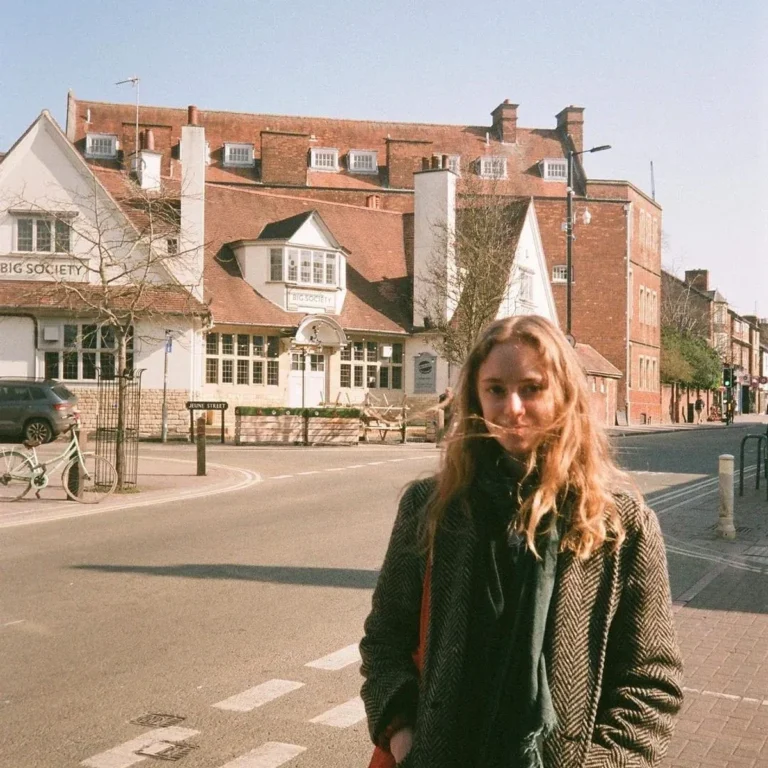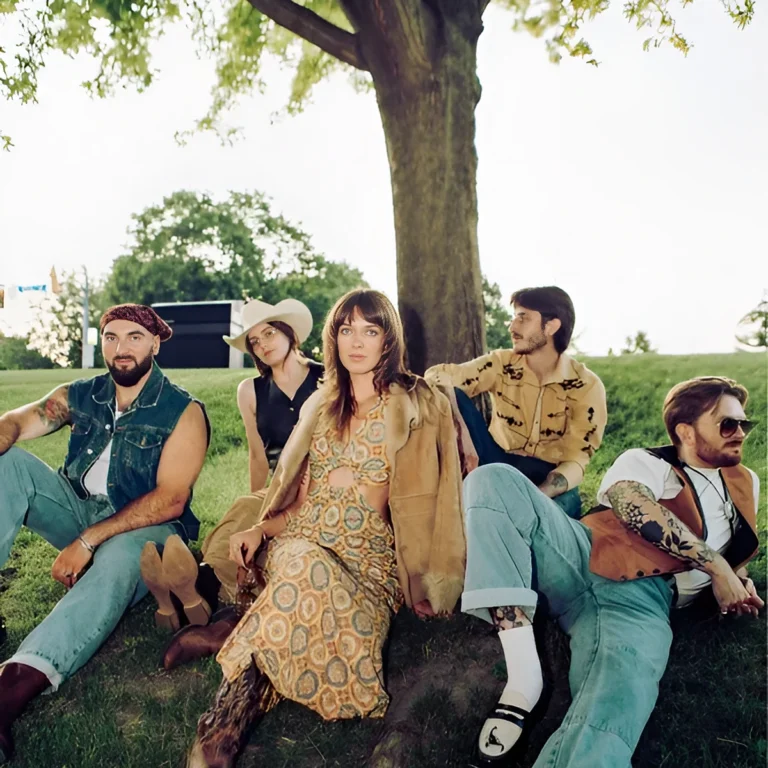

Laura Veirs performing at Bumbershoot.
Laura Veirs performing at Bumbershoot.
Laura Veirs has made records with producers, bands and a Newport Folk Festival supergroup. For Temple Songs she went to the studio at the bottom of her garden with two microphones and a laptop, and did all of it herself.
The album arrived on 14 August through Raven Marching Band. Tape Op notes the simple fact underneath it: this is the first album she has recorded on her own.
Everything Except the Saxophone
The instrument list is the story. Far Out points out that Veirs plays all of it — guitars, bass, drums, tambourine, percussion, vocals — with one exception, a saxophone supplied by an unnamed guest.
That is a different proposition from a singer-songwriter overdubbing a few parts. Drums are the give-away: a folk musician who tracks her own drum kit has decided that the record’s rhythmic feel is a compositional matter rather than something to hire in.
Far Out’s reviewer, Matthew Ingate, gave it 3.5 and described the collection as “quiet and meditative reflections on being alive, being in love, being aware, and at times, the difficulties of simply being”.
It also changes what the songs can be. A writer who knows she will be playing the drums writes differently from one who will hand a demo to a session player, because every part has to be inside her own technical reach. The constraint shows in the arrangements, which are spare by design rather than by budget.
Where the Record Turns
The opening pair are, in Ingate’s description, “delicate, wistful, ephemeral and transitory”. “Arc Still Bends” begins on acoustic fingerpicking and a question — “The arc still bends towards justice, right?” — and builds towards a crescendo before drifting away again.
The record changes at track three. On “Pulse”, Far Out hears drums arrive and drive the song, riding the cymbals for shimmer while two electric guitars weave around each other, before “an unexpected saxophone wrongfoots, delights and disorients you out of the comfort you’d sunk into in the first two songs”.
After that it spreads out. mxdwn catalogues the rest: “Feeling Returns” purging old habits, “Flying Into Darkness” as the album’s most fraught lyric, “Colors Sing” a purely instrumental track that splits the record in half, and “Out From Undercover” built on chant-like vocal stacks with saxophone.
Sequencing an instrumental at the midpoint is the move of somebody thinking in sides. “Colors Sing” gives a short, dense record a hinge, and on an album this quiet a track with no words in it functions as a room to stand in rather than an interlude to skip.
No Masters
Two songs late in the sequence give the album its spine. mxdwn reads “No Masters” as taking its title from the anarcha-feminist slogan and recounting the removal of male authority; “New Life Over There” bids farewell to a former lover.
Placed on a record she made entirely alone, in a room she owns, those titles stop being abstract. The production method and the lyrics are making the same argument, and neither needs the other explained.
“Sunlight and Doom” closes it, on duality. A record that opens by asking whether justice is still coming and ends by holding two things at once is not offering resolution, which is the more honest position.
The opening question is a quotation before it is a lyric. “The arc of the moral universe is long, but it bends toward justice” is a line from the American civil rights tradition, and turning it into a question with “right?” on the end is a small, devastating edit — the sentiment intact, the certainty gone.
What Low Fidelity Actually Buys
mxdwn is clear-eyed about the sound: the album is “short”, “bare-boned and rough around the edges”, with a lower-fidelity atmosphere in which you can hear “the scratch of fingers on a fretboard, the dead convolution of a small room and the breaths left between vocal takes”.
Those are usually listed as faults. Here they are the point. Two microphones in a small room cannot flatter anything, and a record made that way is a document of a person in a space rather than a constructed object.
The contrast with how these decisions usually go is instructive. Weyes Blood spent months underneath Electric Lady Studios chasing a particular kind of room; Veirs walked down her garden. Both are choices about what a listener should hear behind the voice.
Two microphones is the specific number worth dwelling on. It is enough for a voice and an instrument, or a stereo pair on a guitar, and nothing else at once — which means every arrangement had to be built one layer at a time, with each pass committing her further to decisions she could not easily undo.
Coming Back From Not Writing
The album follows a long stretch in which very little arrived. mxdwn notes she had not written much since Found Light, and Temple Songs is the record that ended it.
Writer’s block is usually discussed as a mystery, and the practical cure on display here is unglamorous: remove everybody else from the room. No producer waiting, no session booked, no players to justify the cost of — just a shed, a laptop and however long it takes.
The shed is doing something a booked studio cannot, which is to make the cost of a bad day zero. A writer who has not produced anything for years cannot afford a room that charges by the hour, because the meter turns every unproductive session into evidence.
The self-owned label completes the arrangement. Raven Marching Band means there is no release date imposed from outside, which is the other half of what a blocked writer needs.
There is a long tradition behind it. Home-recorded folk albums made on minimal equipment have a particular authority precisely because nobody could have intervened, and a listener hears the absence of a committee as honesty whether or not that is fair.
An Ageless Voice, Multi-Tracked
Far Out’s most striking observation is about the singing. Veirs harmonises with herself throughout in “ethereal, multi-tracked and layered” vocals, and Ingate writes that she “doesn’t sound her age, or any other”, finding the effect “more spiritual and fairy-like than human”.
He makes a point of the chronology, too. Veirs began recording years before the younger artists her voice now gets compared to, which makes the comparisons run backwards — she is not following a contemporary sound so much as having arrived at one first.
Her collaborative history is substantial: a decade ago she performed at Newport as part of a trio with Neko Case and k.d. lang, and her records have generally been made with other people in the room.
Fifteen albums in, most songwriters are managing a catalogue rather than adding to it. Making the least commercially engineered record of a long career at this point is a decision that only makes sense if the writing was the problem being solved, and the evidence is that it was.
Which is what makes this one worth attention. A musician who knows exactly how good a collaboration can be, choosing to make a record where the only other voice is her own, has said something about this particular moment that no amount of production would have conveyed.
About The Author