
Skip to content
August 28, 2026
  • Instagram
  • Facebook
  • TikTok
  • YouTube
  • Twitter
AcousticMusic.News

AcousticMusic.News

Acoustic music, jazz and classical

Primary Menu
  • Home
  • Genres
    • Blues
    • Jazz
    • Folk
    • Classical
    • Folk Ballad
    • Folk Pop
    • Electric Folk
    • Soft Folk
    • World Folk
    • Acoustic Rock
    • Cool Jazz
    • Smooth Jazz
    • Contemporary Jazz
    • Gypsy Jazz
    • Big Band
    • Bossa Nova
    • Baroque
    • Opera
    • Orchestral
    • Modern Classical
  • About Us
    • About Us
    • Contact Us
    • Privacy Policy
    • Cookie Policy
Light/Dark Button
Subscribe
  • Home
  • Contemporary Jazz
  • Shabaka Quit the Saxophone in 2023 and Has Picked It Back Up
  • Article
  • Contemporary Jazz
  • Featured
  • Music
  • News

Shabaka Quit the Saxophone in 2023 and Has Picked It Back Up

Will Lisil August 25, 2026 7 minutes read
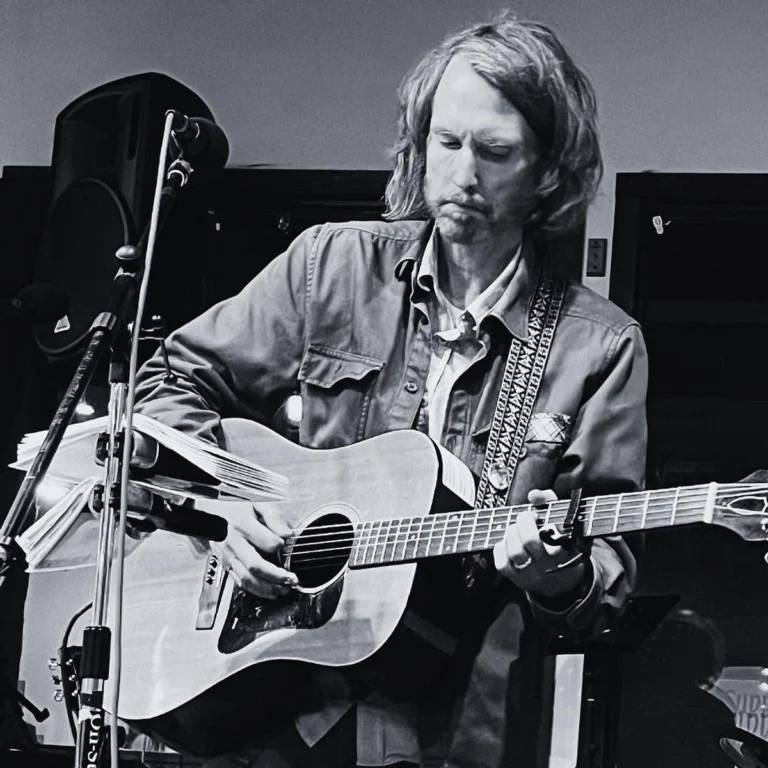
Black and white close-up of Shabaka Hutchings playing the saxophone

On New Year’s Day 2023, Shabaka Hutchings posted a statement saying he would stop playing the saxophone from the end of that year. He was, at the time, one of the most visible saxophonists in British music.

Three years on, the position has reversed. By 2026 he had returned to the instrument, and his solo album Of the Earth arrived in March through Shabaka Records.

The Instagram Post That Ended a Decade

Musicians announce breaks constantly and the announcements rarely mean much. This one was specific: a named instrument, a stated end date, and a public statement rather than a quiet withdrawal.

The reason he later gave was not artistic restlessness but the physical and emotional strain that comes from performing on the saxophone on tour. That is an unusually plain admission from someone whose reputation was built on the instrument.

It is also a real occupational problem rather than a metaphor. The saxophone demands sustained breath pressure and embouchure control for hours at a time, and a heavy touring schedule turns that into repeated physical load with no recovery window. Wind players describe it in the language of athletics because that is what it resembles.

The emotional half is harder to quantify and probably the more important one. Being publicly identified with a single instrument means every booking, every festival billing and every listener expectation arrives attached to it, and stepping away is the only way to find out what is left underneath.

He Already Had the Other Instruments

What made the decision viable is that the alternative was already in place. His instrument list runs to clarinet and bass clarinet alongside the saxophone, and then further out: the Japanese shakuhachi, the Andean quena and the Brazilian pifano flute.

Those are not novelty additions. Each belongs to a distinct tradition with its own technique, tuning conventions and repertoire, and picking any of them up seriously means learning a different set of physical habits.

The flutes also solve the specific problem he named. They ask far less of the player physically than a tenor saxophone does, which makes a long touring life possible on them in a way it evidently was not on the saxophone.

He had already tested the ground. His debut solo EP, Afrikan Culture, appeared in May 2022 under the mononym Shabaka — before the announcement — and Perceive Its Beauty, Acknowledge Its Grace followed on Impulse! in April 2024, inside the hiatus.

The Bands He Left Behind

The scale of what he stepped away from is easy to understate. Sons of Kemet, the band he formed, ran from 2011 to 2022 with a lineup of saxophone and clarinet, tuba and two drummers — a configuration built around his playing.

They released Burn in 2013, which won the Arts Desk’s album of the year, took Best Jazz Act at the MOBO Awards the same year, and moved to Impulse! for Your Queen Is a Reptile in 2018 — a Mercury Prize nominee that coincided with the London jazz scene breaking into wider public view. Black to the Future followed in 2021, and the band disbanded in 2022.

He was also a member of The Comet Is Coming, performing as King Shabaka, whose debut Channel the Spirits was itself Mercury-nominated in 2016. Shabaka and the Ancestors released Wisdom of Elders on Gilles Peterson’s Brownswood the same year and We Are Sent Here by History on Impulse! in March 2020.

Two Mercury nominations across two different bands is a rare position to hold, and it is the position he was in when he decided the instrument holding all of it together had to go.

A Label Built on Three-Day Sessions

The work that continued through the hiatus is the most revealing part. In 2020 he launched Native Rebel Recordings in London with the music industry publisher Matt Smith, drawing on ECM Records and its founder Manfred Eicher for the idea that a label can have a single overriding aesthetic.

The method is strict. Every Native Rebel release is recorded at RAK Studios across a three-day period, with rehearsal built into those same three days, specifically to keep the musicians’ first encounters with the material on the recording.

That is a deliberate rejection of how modern records are usually assembled. Extended sessions let a band refine a piece until the uncertainty is gone, and this method exists to preserve exactly that uncertainty. Our piece on why dynamic range is the point in acoustic music covers the related argument about what over-processing removes.

The catalogue includes Chelsea Carmichael, Confucius MC and Kwake Bass, the Brother Moves On, Ganavya Doraiswamy and Kofi Flexxx, plus a tenth-anniversary reissue of Burn and a remaster of Song of the Motherland, the 1985 reggae poetry album made by his father.

The Clarinet Came First Anyway

Read against his biography, the saxophone hiatus looks less like a break than a return. Born in London in 1984, he moved to Birmingham at two and was raised from the age of six in his parents’ native Barbados, where he picked up the clarinet at nine and practised along to Nas, the Notorious B.I.G. and Tupac as well as to Crop Over rhythms.

His father, Anum Iyapo, was a graphic designer who worked on records by King Tubby and Jah Shaka before making his own album. Returning to England at nineteen, Hutchings went to the Guildhall School of Music and Drama and took a classical degree — on the clarinet, not the saxophone.

He then joined Tomorrow’s Warriors, the workshop run by the bassist Gary Crosby with Janine Irons and the New Orleans trumpeter Abram Wilson, where he met most of the musicians he would later work with across the South East London scene. He was a BBC New Generation Artist from 2010 to 2012.

That scene has always sat awkwardly under the word jazz, and Hutchings and his contemporaries have tended to shrug the label off. Reviewers have repeatedly noted that the London players draw on acid house, drum and bass, hip hop and soca with much less blues in the mix than American jazz carries, which is the clearest structural difference between the two. An artist working from that starting point has less invested in any single instrument being definitive.

The recognition came anyway. He won a MOBO for best jazz act with Sons of Kemet in 2013, the Paul Hamlyn Composer Award in 2014 and Jazz Innovation awards from Jazz FM, and he directed We Out Here, the Brownswood compilation that introduced much of the scene to listeners outside London.

So the instrument he became famous for was not the one he trained on. Setting it down at the end of 2023 returned him to the woodwind family he started in, which reframes the whole decision as a correction rather than a rupture.

What the Return Actually Means

Coming back to the saxophone by 2026 is the part that completes the story, and it is worth resisting the obvious reading. A player who returns after a public departure is not admitting the departure was a mistake.

The likelier explanation is the one the original statement implied. If the problem was the strain of performing on it constantly, then removing the constant is the fix, and the instrument becomes available again the moment it stops being an obligation.

His playing history outside his own bands supports that reading — sessions with the Sun Ra Arkestra, Andre 3000, Floating Points, Mulatu Astatke and the London Brew group assembled in December 2020 to improvise on Bitches Brew, released in March 2023. He has never worked in only one mode.

Of the Earth arrived in March on Shabaka Records, a new imprint name alongside the label he already runs. Three years after announcing he was done with the saxophone, he is playing it again on his own schedule, which was arguably the point of stopping.

About The Author

Will Lisil

Founder of MW3.biz, building technology that empowers creators and democratising access to digital tools.

See author's posts

Post navigation

Previous: How Classical and Jazz Labels Actually Earn

Related Stories

How Classical and Jazz Labels Actually Earn
  • Acoustic Rock
  • Baroque
  • Big Band
  • Blues
  • Bossa Nova
  • Celtic Folk
  • Chamber Folk
  • Classical
  • Contemporary Folk
  • Contemporary Jazz
  • Cool Jazz
  • Electric Folk
  • Folk
  • Folk Ballad
  • Folk Pop
  • Gypsy Jazz
  • Indie Folk
  • Irish Folk
  • Jazz
  • Minimalist
  • Modern Classical
  • Music Industry
  • Opera
  • Orchestral
  • Romantic
  • Scottish Folk
  • Singer-Songwriter Folk
  • Smooth Jazz
  • Soft Folk
  • Traditional Folk
  • Welsh Folk
  • World Folk

How Classical and Jazz Labels Actually Earn

Clara Ambrose August 25, 2026
The Room Is Part of the Instrument
  • Acoustic Rock
  • Baroque
  • Big Band
  • Blues
  • Bossa Nova
  • Celtic Folk
  • Chamber Folk
  • Classical
  • Contemporary Folk
  • Contemporary Jazz
  • Cool Jazz
  • Electric Folk
  • Folk
  • Folk Ballad
  • Folk Pop
  • Gypsy Jazz
  • Indie Folk
  • Irish Folk
  • Jazz
  • Minimalist
  • Modern Classical
  • Music Production & Producers
  • Opera
  • Orchestral
  • Romantic
  • Scottish Folk
  • Singer-Songwriter Folk
  • Smooth Jazz
  • Soft Folk
  • Traditional Folk
  • Welsh Folk
  • World Folk

The Room Is Part of the Instrument

Clara Ambrose August 25, 2026
Why Jazz Trios Record in One Room Together
  • Acoustic Rock
  • Baroque
  • Big Band
  • Blues
  • Bossa Nova
  • Celtic Folk
  • Chamber Folk
  • Classical
  • Contemporary Folk
  • Contemporary Jazz
  • Cool Jazz
  • Electric Folk
  • Folk
  • Folk Ballad
  • Folk Pop
  • Gypsy Jazz
  • Indie Folk
  • Irish Folk
  • Jazz
  • Minimalist
  • Modern Classical
  • Opera
  • Orchestral
  • Romantic
  • Scottish Folk
  • Singer-Songwriter Folk
  • Smooth Jazz
  • Soft Folk
  • Traditional Folk
  • Welsh Folk
  • World Folk

Why Jazz Trios Record in One Room Together

Clara Ambrose August 25, 2026

Recent Posts

  • Shabaka Quit the Saxophone in 2023 and Has Picked It Back Up
  • How Classical and Jazz Labels Actually Earn
  • What High Sample Rates Actually Do
  • Brushes Are the Hardest Thing to Record in Jazz
  • Period Instruments and the Pitch Question

Recent Comments

No comments to show.

Archives

  • August 2026
  • July 2026

Categories

  • Acoustic Rock
  • Article
  • Baroque
  • Big Band
  • Blues
  • Bossa Nova
  • Celtic Folk
  • Chamber Folk
  • Classical
  • Contemporary Folk
  • Contemporary Jazz
  • Cool Jazz
  • Electric Folk
  • Featured
  • Folk
  • Folk Ballad
  • Folk Pop
  • Gypsy Jazz
  • Indie Folk
  • Irish Folk
  • Jazz
  • Minimalist
  • Modern Classical
  • Music
  • Music Discussion & Analysis
  • Music Industry
  • Music Production & Producers
  • Music Technology & Innovation
  • News
  • Opera
  • Orchestral
  • Romantic
  • Scottish Folk
  • Singer-Songwriter Folk
  • Smooth Jazz
  • Soft Folk
  • Traditional Folk
  • Welsh Folk
  • World Folk

Latest

Black and white close-up of Shabaka Hutchings playing the saxophone
  • Article
  • Contemporary Jazz
  • Featured
  • Music
  • News

Shabaka Quit the Saxophone in 2023 and Has Picked It Back Up

Will Lisil August 25, 2026
How Classical and Jazz Labels Actually Earn
  • Acoustic Rock
  • Baroque
  • Big Band
  • Blues
  • Bossa Nova
  • Celtic Folk
  • Chamber Folk
  • Classical
  • Contemporary Folk
  • Contemporary Jazz
  • Cool Jazz
  • Electric Folk
  • Folk
  • Folk Ballad
  • Folk Pop
  • Gypsy Jazz
  • Indie Folk
  • Irish Folk
  • Jazz
  • Minimalist
  • Modern Classical
  • Music Industry
  • Opera
  • Orchestral
  • Romantic
  • Scottish Folk
  • Singer-Songwriter Folk
  • Smooth Jazz
  • Soft Folk
  • Traditional Folk
  • Welsh Folk
  • World Folk

How Classical and Jazz Labels Actually Earn

Clara Ambrose August 25, 2026
What High Sample Rates Actually Do
  • Acoustic Rock
  • Baroque
  • Big Band
  • Blues
  • Bossa Nova
  • Celtic Folk
  • Chamber Folk
  • Classical
  • Contemporary Folk
  • Contemporary Jazz
  • Cool Jazz
  • Electric Folk
  • Folk
  • Folk Ballad
  • Folk Pop
  • Gypsy Jazz
  • Indie Folk
  • Irish Folk
  • Jazz
  • Minimalist
  • Modern Classical
  • Music Technology & Innovation
  • Opera
  • Orchestral
  • Romantic
  • Scottish Folk
  • Singer-Songwriter Folk
  • Smooth Jazz
  • Soft Folk
  • Traditional Folk
  • Welsh Folk
  • World Folk

What High Sample Rates Actually Do

Clara Ambrose August 25, 2026
Brushes Are the Hardest Thing to Record in Jazz
  • Acoustic Rock
  • Baroque
  • Big Band
  • Blues
  • Bossa Nova
  • Celtic Folk
  • Chamber Folk
  • Classical
  • Contemporary Folk
  • Contemporary Jazz
  • Cool Jazz
  • Electric Folk
  • Folk
  • Folk Ballad
  • Folk Pop
  • Gypsy Jazz
  • Indie Folk
  • Irish Folk
  • Jazz
  • Minimalist
  • Modern Classical
  • Opera
  • Orchestral
  • Romantic
  • Scottish Folk
  • Singer-Songwriter Folk
  • Smooth Jazz
  • Soft Folk
  • Traditional Folk
  • Welsh Folk
  • World Folk

Brushes Are the Hardest Thing to Record in Jazz

Clara Ambrose August 25, 2026
  • Home
  • Privacy Policy
  • Cookie Policy
  • Instagram
  • Facebook
  • TikTok
  • YouTube
  • Twitter
AcousticMusic.News | ReviewNews by AF themes.
AcousticMusic.News
Manage Consent
To provide the best experiences, we use technologies like cookies to store and/or access device information. Consenting to these technologies will allow us to process data such as browsing behavior or unique IDs on this site. Not consenting or withdrawing consent, may adversely affect certain features and functions.
Functional Always active
The technical storage or access is strictly necessary for the legitimate purpose of enabling the use of a specific service explicitly requested by the subscriber or user, or for the sole purpose of carrying out the transmission of a communication over an electronic communications network.
Preferences
The technical storage or access is necessary for the legitimate purpose of storing preferences that are not requested by the subscriber or user.
Statistics
The technical storage or access that is used exclusively for statistical purposes. The technical storage or access that is used exclusively for anonymous statistical purposes. Without a subpoena, voluntary compliance on the part of your Internet Service Provider, or additional records from a third party, information stored or retrieved for this purpose alone cannot usually be used to identify you.
Marketing
The technical storage or access is required to create user profiles to send advertising, or to track the user on a website or across several websites for similar marketing purposes.
  • Manage options
  • Manage services
  • Manage {vendor_count} vendors
  • Read more about these purposes
View preferences
  • {title}
  • {title}
  • {title}