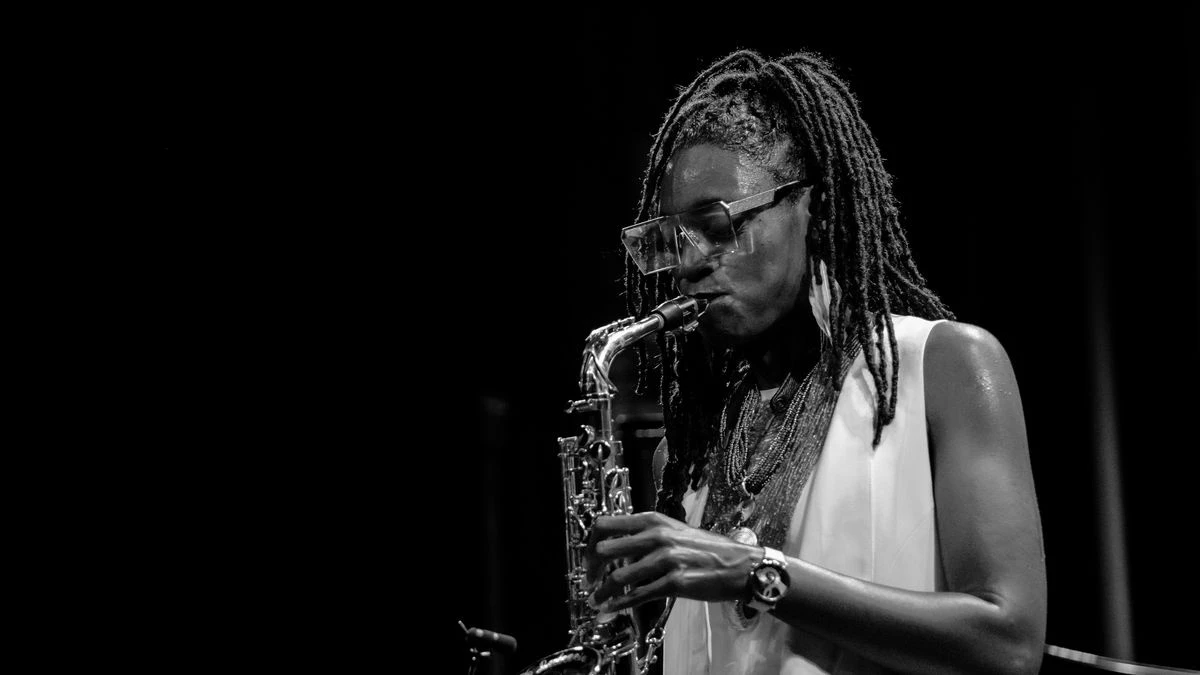
Lakecia Benjamin at the Oslo Jazzfestival.
Lakecia Benjamin at the Oslo Jazzfestival.
An album called We Dream could easily have been a solo statement. Lakecia Benjamin did the opposite, and filled it with other people: three trumpeters, two pianists, a second saxophonist, a poet, two singers and a guest drummer she plainly did not need.
The reason is in a single sentence she gave C-Heads Magazine: “None of my dreams happened alone. Every opportunity I’ve had was made possible by mentors, teachers, family, community, and people who believed in me.”
A Guest List That Is the Argument
The core band is Oscar Perez and Miki Hayama on piano, Elias Bailey on acoustic bass and Jonathan Barber on drums, with Benjamin on alto. Around them, JazzTrail lists the visitors: Terence Blanchard, Chief Xian aTunde Adjuah, Sean Jones, Chris Potter, Jeff “Tain” Watts, Hiromi, Tarriona “Tank” Ball, Bilal and Kassa Overall.
That is an unusual density of famous names for a sixth album, and on most records it would read as insurance. Here it is the thesis. A record about not arriving alone that featured only its bandleader would be arguing against itself.
Benjamin’s own account of the selection is about character rather than reputation. “What connects all of them is courage,” she said. “Every artist on this record has been willing to take risks, challenge expectations, and remain authentic.”
Two pianists in one core band is the detail that gives the game away. Oscar Perez and Miki Hayama are both listed on the record, and a bandleader who keeps two players on the same instrument is deliberately refusing the usual economy of a working quartet.
Three Trumpeters, Three Jobs
The trumpet appearances are distributed rather than stacked. Blanchard opens the album on “First Light” and stays for “Beyond the Dawn”; Sean Jones takes “My Only” and returns for “Dream Breaker”; Chief Xian aTunde Adjuah has “Mi Gente” to himself.
JazzTrail hears them doing genuinely different things. Blanchard’s “aching trumpet cries” bring the opener to a simmer under spoken word, then trade articulated solos with Benjamin over what the review calls a spiritual 3/4 modal landscape. Jones works a modern jazz-hop sensibility with shifting tempos.
Adjuah’s track goes somewhere else entirely — a soft R&B opening that blossoms into a Latin-infused section of exuberant unisons and swinging momentum. Three trumpeters on one album only works if each is asked for something the others would not do.
The distribution also protects the album from becoming a showcase. Guests clustered on two or three tracks turn a record into a compilation; spread across ten, they become part of an argument. Nobody on this album appears often enough to take it over.
What Comes After the Coltranes
Benjamin’s reputation was built substantially on Coltrane material, and JazzTrail’s review makes the point that We Dream ventures beyond that influence. For a saxophonist, stepping out of that particular shadow is the hardest structural move available.
The record follows Phoenix and the Grammy-nominated single “Noble Rise”, and Paris-Move reads the sequence as an artist steadily freeing herself from frameworks and expectations — each album widening the horizon and demonstrating a greater capacity to translate a vision into sound.
The alternative to a lineage is a community, which is what the guest list supplies. Instead of measuring herself against dead saxophonists, Benjamin has surrounded herself with living ones and with musicians who are not saxophonists at all.
It is a different solution to the problem Shabaka Hutchings answered by putting the saxophone down entirely — two players of the same generation deciding that the instrument’s inherited weight had to be dealt with before anything new could be said on it.
The Poem at the Centre
The title track carries spoken word by the New Orleans poet Tarriona “Tank” Ball, and hip-hop and R&B are, in JazzTrail’s phrase, embedded in its DNA. The album has been described as a cinematic, poem-driven journey rather than a set of tunes.
Spoken word in jazz has a long and uneven history, and it usually fails by treating the poem as a guest rather than as material. Placing Ball’s on the title track — the song the record is named for — is a structural decision that prevents that.
“Right Now” continues the fusion, with the soul singer Bilal and the drummer-producer Kassa Overall, and Benjamin takes a solo the review describes as forceful and twangy, using wah-wah effects and raw energy. An alto saxophone through a wah pedal is not a traditionalist’s instinct.
Handing a poet the title track is also a decision about who gets to define the record. On most jazz albums the title track is where the bandleader makes the statement. Here somebody else says it, in words, and Benjamin plays around her.
Potter, Hiromi and the Funk End
Chris Potter propels “Dream Breaker” into what JazzTrail calls ecstatic post-bop territory, alongside Jones and Jeff “Tain” Watts — a rhythm section swap that turns one track into a different band entirely.
Hiromi appears twice. She grooves through “Hiromi Jam” and energises the funk-fusion of “Flame Keeper”, which the review calls an eccentric and satisfying romp with playful synthesizer flourishes. A record that can hold both an aching Blanchard ballad and a synth romp is taking a real risk with coherence.
JazzTrail’s verdict is that the risk mostly pays: while juggling a wide range of genres, Benjamin rarely loses her grip, and the album secures its place within an increasingly significant body of work.
Watts on one track is the clearest example of what the guest list is for. Benjamin already has an excellent drummer in Jonathan Barber, who carries the rest of the album; bringing in another for a single piece is not about filling a gap but about what a specific player does to a specific tune.
New York Taught Her to Listen
Asked about the city, Benjamin gave the answer that explains the album’s method. “New York taught me how to listen. It’s one of the few places where every culture, every language, and every musical tradition exists side by side.”
That is a description of a record with Latin sections, hip-hop, R&B, post-bop and funk-fusion on it, made by someone who does not experience those as separate departments. Her framing of hope is equally practical: “The hope I was searching for wasn’t naïve optimism. It was the belief that even in difficult times we can choose compassion, connection, and imagination.”
She is direct about what she was after. “I was looking for a reminder that we still belong to one another.” An album is a strange instrument for that argument and a surprisingly effective one, because a session is the only place where a claim about belonging can be tested by twelve people in the same room.
Her account of what she measures herself by has shifted too. “Today, success means creating meaningful work, maintaining genuine relationships, continuing to grow, and making a positive impact on other people.” Three of those four are about other people, which is the album in a sentence.
Her definition of the work is the least grandiose thing in the interview: “Artistry isn’t about perfection — it’s about curiosity, honesty, and the willingness to keep discovering.” On a record with this many voices on it, curiosity is not a virtue so much as a requirement.
About The Author