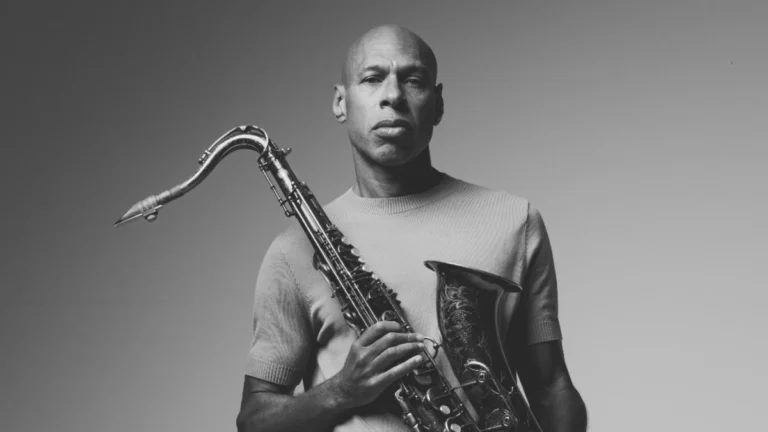
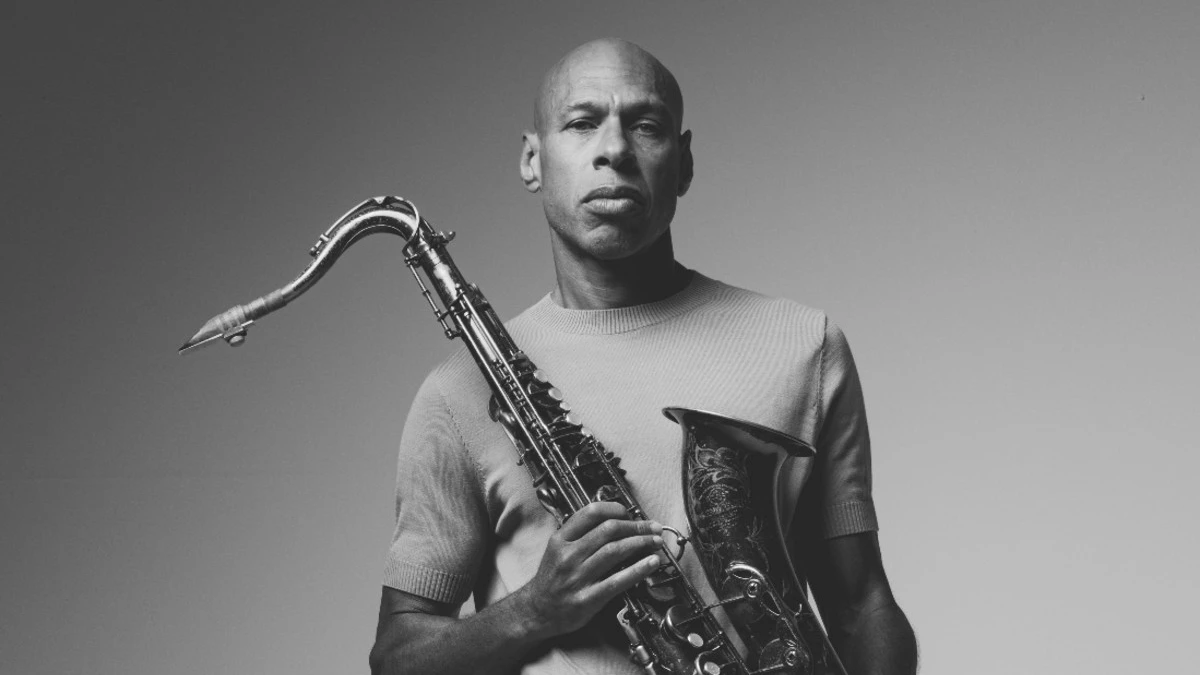
For the first stretch of Joshua Redman’s new album, there is no piano and no guitar. The tenor saxophone carries the harmony on its own, then with a bass, then with a bass and drums, and it is not until the record is six tracks in that a chordal instrument is heard, according to Glide Magazine’s review. For a tribute to Sonny Rollins, the great master of the piano-less saxophone trio, that decision is the point.
The album is If Ever You Would Leave Us (we play for Rollins), out on Friday 20 November through Blue Note. It gathers 11 pieces from the Rollins repertoire, his own tunes and the standards he made his own, played by Joshua Redman in a different configuration almost every time.
The Calls Redman Made After Rollins Died
Sonny Rollins died in late May at the age of 95. The project came together in the weeks that followed, when Redman began calling friends and colleagues to set up studio sessions in New York, Dork reported. It is his third album for Blue Note.
Redman has been open about how personal the loss felt. “Sonny’s passing definitely hit me hard,” he said, as quoted by Dork. “It felt not unlike the passing of a parent. He certainly felt like a musical father, grandfather and godfather, all rolled into one, for me and I think for all of us.”
That sense of family runs through the line-up. The players are drummer Marcus Gilmore, bassists Christian McBride and Larry Grenadier, pianist Kevin Hays, guitarist Peter Bernstein, fellow tenor saxophonist Chris Potter, and two singers, Cécile McLorin Salvant and Gabrielle Cavassa. Hays and Bernstein both played in Rollins’ own bands, which gives the record a connection to its subject that goes beyond the title.
Five Tracks Before a Piano Arrives
Redman opens alone. A brief, fervent solo saxophone reading of There Will Never Be Another You takes its cue from a Rollins trio performance recorded live in Sweden in 1959 that circulated for years among musicians and collectors as a bootleg, Glide reported. It is a bold way to begin, with nothing to lean on but the horn and the room.
McBride joins for a duo on Doxy, one of Rollins’ best-known tunes, which Glide described as full of riveting lines and dialogue with a surprisingly cute ending. McBride then stays for a trio with Gilmore on The Last Time I Saw Paris, the Kern and Hammerstein song Rollins recorded in 1957.
The bareness is deliberate. Rollins was so closely identified with the saxophone trio that leaving out piano and guitar for so long feels appropriate rather than austere, Glide argued. When Kevin Hays finally enters on the title track, If Ever I Would Leave You, by Lerner and Loewe, the arrival of chords lands with real weight because the ear has gone without them.
Rollins Standards in 5/4, 7 and Something Like 11
The trio tracks are where Redman takes his biggest liberties. The Last Time I Saw Paris, which Rollins played in 4/4, is recast in 5/4. Rollins’ own Pent-Up House is played mostly in 7, and the rapid-fire Valse Hot, with Grenadier on bass, is in something Glide’s review described as sort of 11.
Redman attributes those shifts to his generation of players trying to put a different spin on tradition, according to the review. It is a respectful kind of disrespect. The melodies are Rollins’, but the floor underneath them has been rebuilt, which forces the improviser to think afresh rather than simply recite.
That approach suits the subject. Rollins was widely acknowledged as the greatest improviser in jazz, as Glide notes, and changing the meter is a way of putting the players in a similar position, where the safe phrases no longer fit and something new has to be found on the spot.
Two Voices and a Second Tenor
The two singers bring their own versions of the Rollins story. McLorin Salvant sings Softly, As in a Morning Sunrise, a song associated with Rollins’ celebrated trio album A Night at the Village Vanguard. The trio format was her choice, Glide reported: her breathy vocal winds around Redman’s supporting bursts over Grenadier and Gilmore before he takes an emotive solo.
Cavassa takes Billie Holiday’s God Bless the Child, which Rollins recorded on The Bridge, his 1962 comeback album. Redman’s arrangement for Bernstein, McBride and Gilmore stays close to the original, and Glide singled out his solo as especially deep. Cavassa also sang on Redman’s previous Blue Note album, Words Fall Short, released in June 2025 with his working quartet of Paul Cornish, Philip Norris and Nazir Ebo, Dork noted.
Chris Potter arrives for Blue Seven, from Rollins’ classic Saxophone Colossus. On the original, Rollins was the only saxophonist, so turning it into a two-tenor blowing session is a pointed change. Glide described Potter as a peer heavily influenced by Rollins and said he pushed Redman to some of his most inspired playing on the date.
Two Rollins Sidemen and a Line Back to Roy Haynes
The lead single, Grand Street, carries the album’s neatest piece of history. It is a lesser-known Rollins composition first recorded for the 1966 album Sonny Rollins and the Big Brass, and Gilmore’s grandfather, the drummer Roy Haynes, played on that original version, Dork reported. Gilmore now plays it with Bernstein and McBride.
Bernstein’s presence matters here too. As a former member of Rollins’ band, he solos on Grand Street after Redman states the theme, and Glide noted that Gilmore and McBride keep the engine room hot underneath. The same review pointed out that Gilmore’s grandfather also drummed on Rollins’ 1957 recording of The Last Time I Saw Paris, so the family thread runs through more than one track.
The album closes with a nod to calypso, without which, as Glide put it, a Rollins tribute would not be complete. Redman deliberately avoided the much-covered St. Thomas and chose Rollins’ own Don’t Stop the Carnival instead, played as a duo with Gilmore, Glide reported. It ends a reflective record on a celebration rather than a lament, a fitting and exhilarating close in the review’s words.
A Teenager’s Tapes and a Phone Call From Dewey Redman
Redman’s attachment to Rollins began early. He found Saxophone Colossus at Berkeley Public Library when he was around 10 or 11, according to Dork. “When I discovered Sonny Rollins, that was my gateway, and my North Star,” he said.
Glide’s review tells a second story from his teens. At 15, obsessed with the saxophone and with Rollins’ improvising, Redman was recorded by his mother, who sent the tapes to his father, the saxophonist Dewey Redman, whom he rarely saw. Months later a phone call came, and the verdict, as Glide recounts it, was simple: “You sound good. You sound like Sonny Rollins.”
The new album arrives in a year full of jazz anniversaries, with the centennials of Miles Davis, John Coltrane and Jimmy Heath, Glide noted. There have been several live tributes to Rollins since his death, but only one tribute album before this one, guitarist Bobby Broom’s Notes of Thanks, released in July, according to the review. For more jazz recorded with an unusual approach to the studio, see how Ezra Collective made most of a UK No. 1 album in a week at Miraval, and for the full list of albums arriving alongside Redman’s this Friday, see the New Music Friday round-up compiled by Gerry Galipault.
About The Author